AI Twitter Highlights · 2026-09-24
AI Twitter/X Highlights Digest · 2026-09-24 (Thu)
Key Takeaways
- Cursor says agent token cost fell ~7% with no quality drop and ships a long “fix your harness” prompt; Claude Code circles share
/claude-api prompt-auditplus Opus 5.5 tip lists. - Browser Use Bench gets redrawn by GPT-6 Sol / Luna and Opus 5.5; OpenCode, Devin, Qoder, and Cline each land product-facing updates.
- The chat keeps moving from “new model” to harness: rauchg’s Brain/Hands/Files split, a Google paper on self-improving harnesses, and Jev as a System One decision model.
1. Cursor: another 7% token cut, plus a public harness playbook
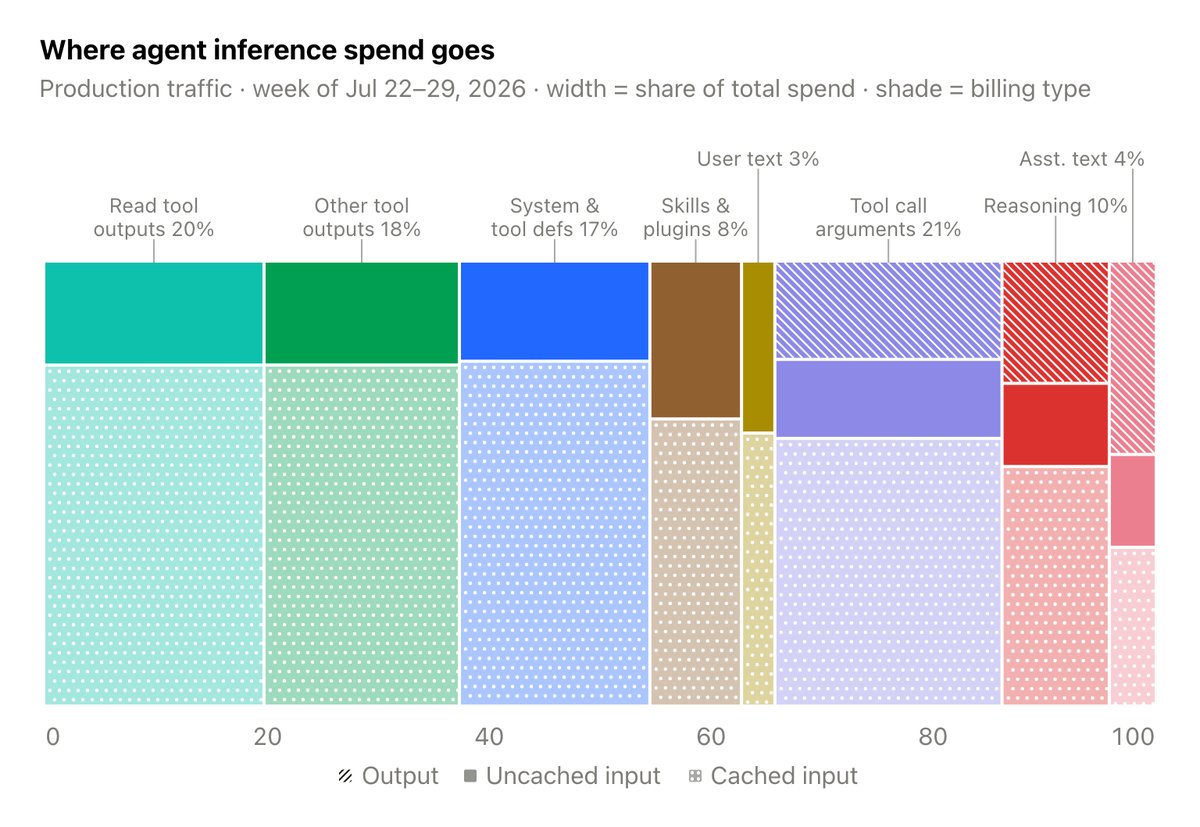
Summary: @cursor_ai said Cursor cut agent token cost by about 7% with no drop in quality—tighter prompts, selective tool loading, better caching, and compressed file reads. The same day, @ericzakariasson posted a long reusable prompt for auditing an agent harness around per-task cost and cache tiers, citing Cursor production lessons. Cursor also linked a write-up of the harness changes.
Why it matters: Day two after the model dump, the IDE side is competing on “same intelligence, smaller bill.”
- Cost note: https://x.com/cursor_ai/status/2102786814633464159
- Harness prompt: https://x.com/ericzakariasson/status/2102853511637774551
- Write-up: https://x.com/cursor_ai/status/2102786816340562200
2. Claude Code: prompt-audit and a 24-tip Opus 5.5 daybook
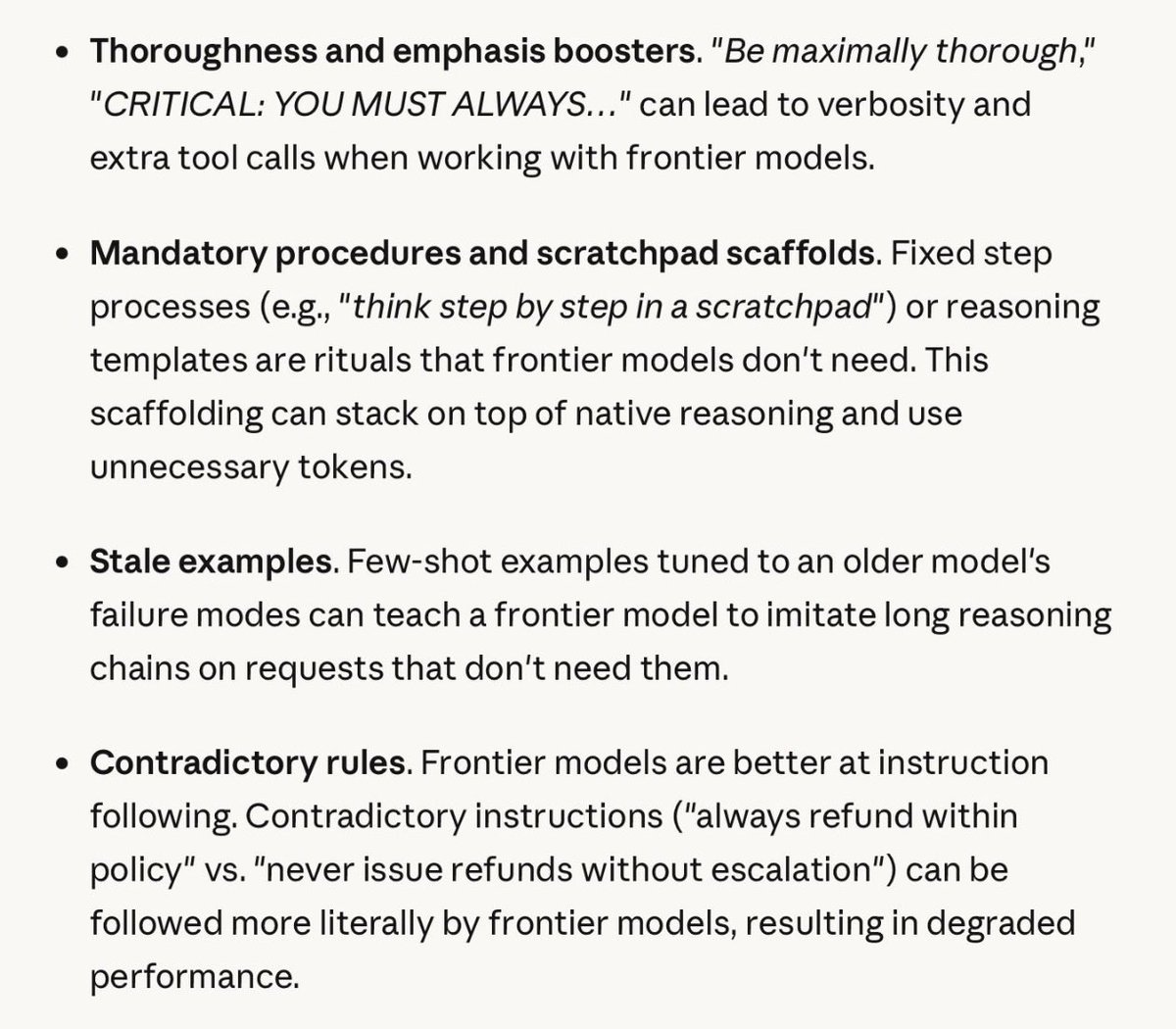
Summary: @RLanceMartin recommends running /claude-api prompt-audit inside Claude Code to scan skills, agent.md, Claude.md, and prompts for anti-patterns that hobble frontier models. @chenchengpro published 24 Opus 5.5 tips after a day of use (task boundaries, skip “think carefully,” mid-run check-ins, etc.). @minchoi rounded up ten wild Opus 5.5 build examples from the community.
Why it matters: After default-model flips, prompt/skill hygiene often moves quality and cost more than another rename.
- prompt-audit: https://x.com/RLanceMartin/status/2102575471502528989
- 24 tips: https://x.com/chenchengpro/status/2102782934189252662
- Ten examples: https://x.com/minchoi/status/2102601488606372243
3. Claude Marketplace: tools, agents, and expert partners
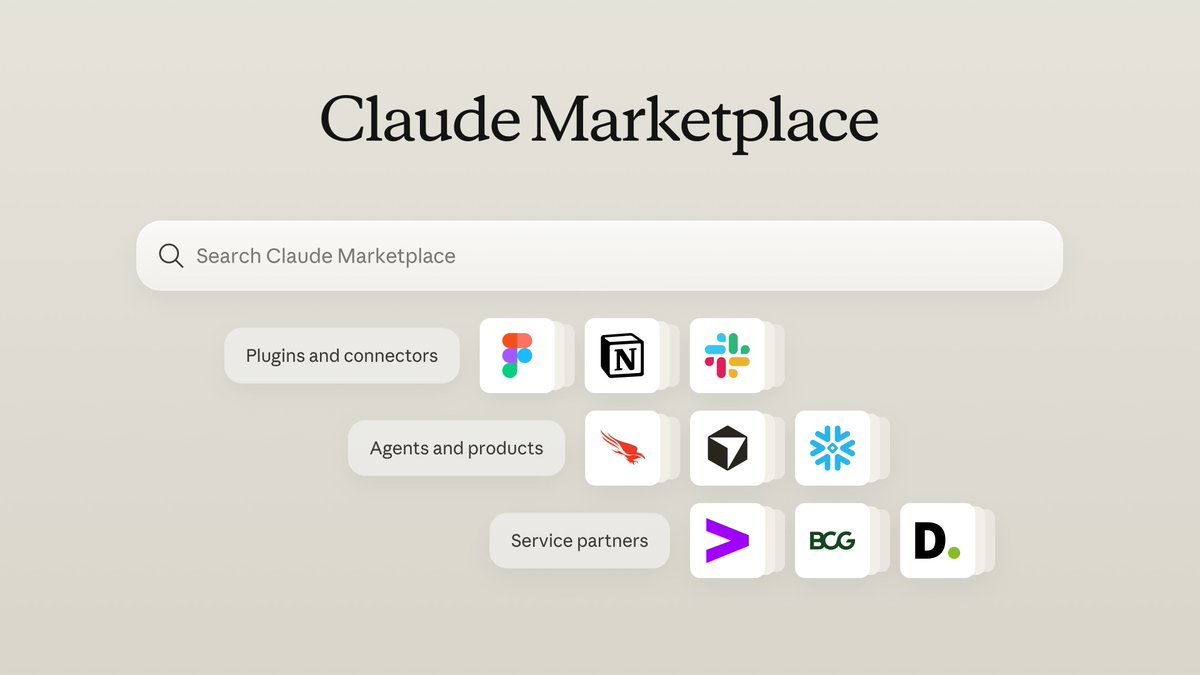
Summary: @claudeai launched discovery on Claude Marketplace—add connectors/plugins like Slack and Notion, buy agents and products, and find expert partners. The story expands from the model itself to an installable shelf.
Why it matters: Coding-agent distribution is starting to look like an app store; after default models comes default plugins.
- Link: https://x.com/claudeai/status/2102840851538080172
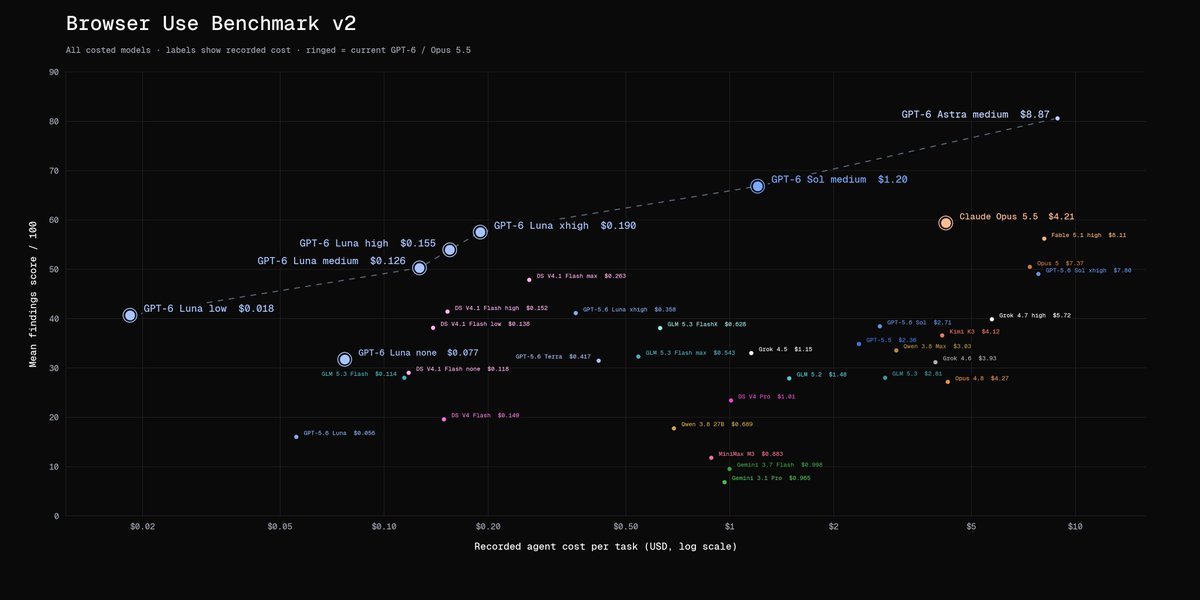
4. Browser Use Bench: Pareto redrawn by Sol / Luna / Opus 5.5
Summary: @browser_use updated Browser Use Bench v2: Claude Opus 5.5 ~59.4; GPT‑6 Sol medium ~66.9 (~3.5× cheaper); GPT‑6 Luna xhigh ~57.6 (~22× cheaper than Opus). On browser automation, both score and $/task moved with the new models.
Why it matters: Computer/browser use is now a day-after axis alongside SWE-style coding benches.
- Link: https://x.com/browser_use/status/2102558423506469010
5. OpenCode: check-in page bug hunt, and the server protocol as base
Summary: @thdxr showed opencode downloading a broken flight check-in page’s source and finding a hidden required form field. Another post stressed that the opencode server protocol underpins rich custom frontends like OpenChamber, with more UIs expected. The pitch remains a hot-swappable open harness, not just model swapping.
Why it matters: A real web bug as demo is more persuasive than another “we support model X” post.
- Check-in bug: https://x.com/thdxr/status/2102567186028274058
- Server protocol: https://x.com/thdxr/status/2102882938815992183

6. Devin: native Teams plus a first-party Microsoft Store app
Summary: @cognition announced two Microsoft-facing updates—native Teams support and a first-party Microsoft Store app—so Devin works better on your machine/workflows, not only on its own cloud PC.
Why it matters: Cloud coding agents keep embedding into enterprise collab surfaces; the channel is the feature.
- Link: https://x.com/cognition/status/2102823962380259443
7. Qoder: design praise plus free Qwen3.8-Flash through Sept 30
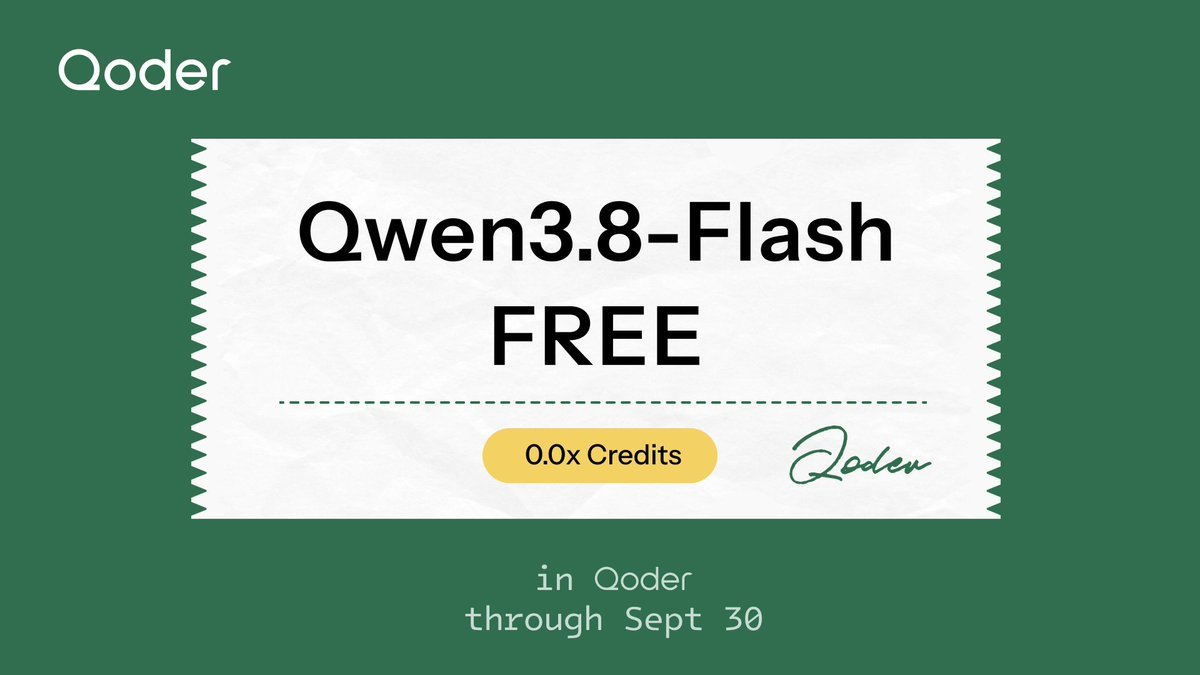
Summary: @chunxiangai said Alibaba’s Qoder now hits top-tier domestic design from site to Desktop (Cursor-ish + matcha pastoral, Dia-like onboarding). Official @qoder_ai_ide made Qwen3.8-Flash free in Qoder through Sept 30 (including free accounts, no Credits claim).
Why it matters: CN IDE agents are shipping polish and free fast models in the same week the global stack races on price.
- Design take: https://x.com/chunxiangai/status/2102597678475673892
- Free Flash: https://x.com/qoder_ai_ide/status/2102786576774566079
8. Harness triad vs self-improve overfitting: Brain / Hands / Files
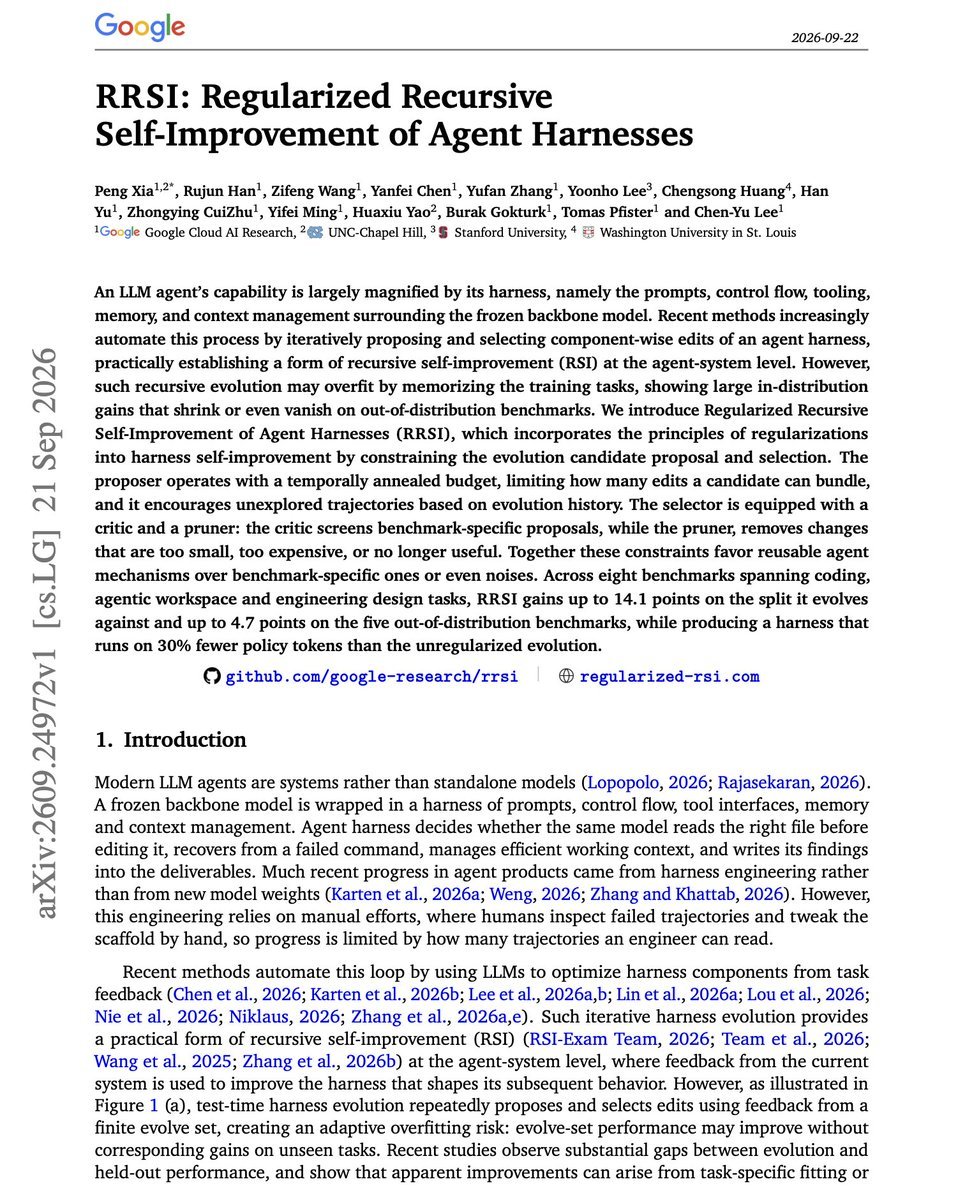
Summary: @rauchg split successful agents (Muse, OpenClaw, Claude Code, …) into Brain (model+harness) / Hands (tools·computer·browser) / Files (memories·skills·repos), and used Vercel Sandbox Drives to argue storage should detach from a full stateful machine. @omarsar0 highlighted a Google paper on self-improving agent harnesses: auto-evolving prompts/control flow can raise training-task scores while hurting real work; RRSI regularizes the loop for better OOD transfer, including Terminal-Bench / SWE-bench gains.
Why it matters: Product narrative and research both warn that the “shell” can save money—or overfit.
- Brain/Hands/Files: https://x.com/rauchg/status/2102820148629614685
- Google harness paper: https://x.com/omarsar0/status/2102853768266256738
9. Jev: System One decision model—nine use cases and a CN deep dive
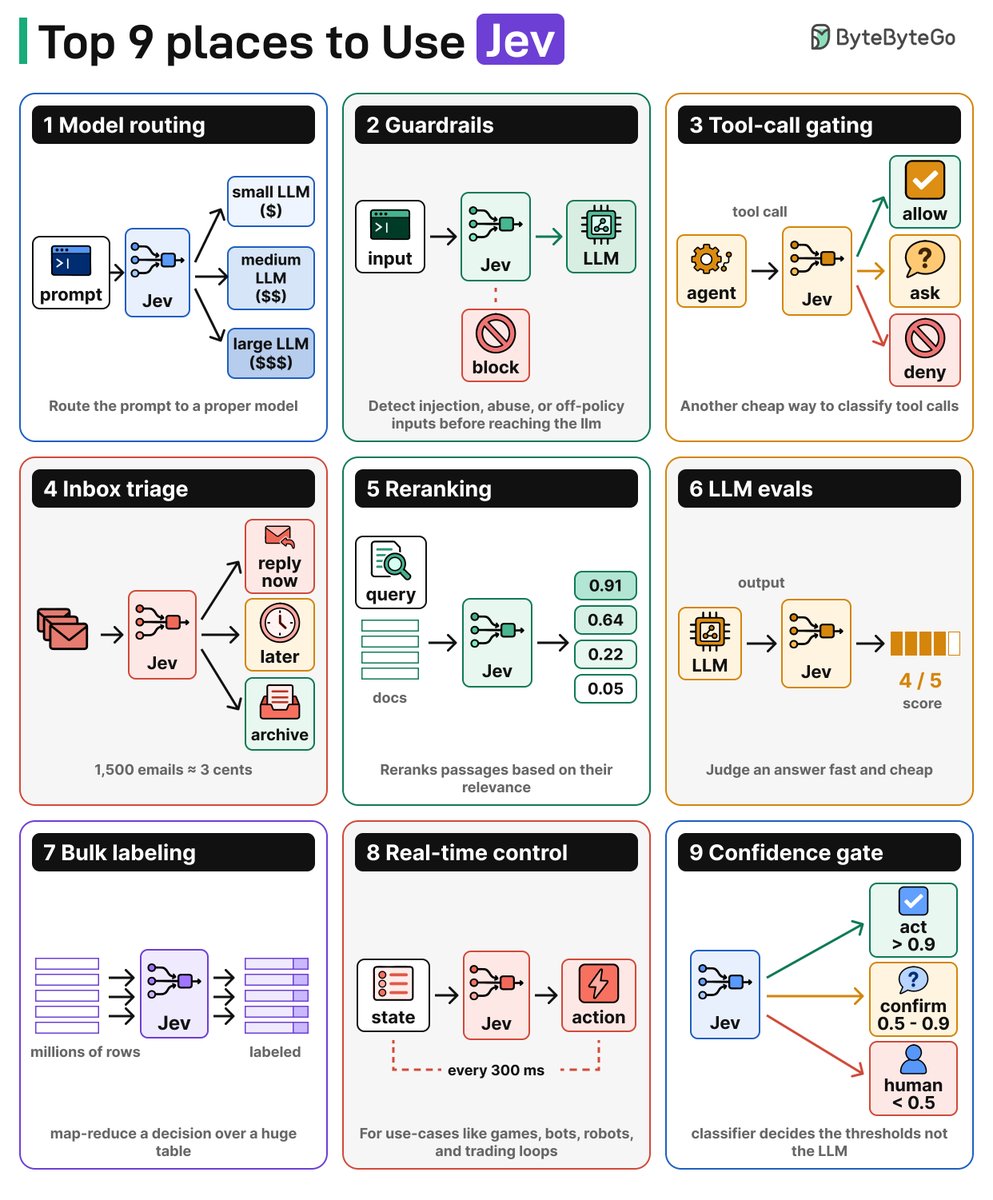
Summary: @alexxubyte presented Jev as TypeSafe’s first System One model—claimed ~100× faster/cheaper than frontier LLMs—with nine use cases people skip when big models are too slow or expensive. @sagacity recommended a long essay arguing ordinary LLMs emit “90% confidence” text that is not a calibrated action probability, while Jev reads decision distributions from internal state. @omarsar0 started a series on building custom harnesses with Jev + Pi (gates, routing, verifiers).
Why it matters: Beyond “LLM writes code,” people are asking when generative models should not be the router/gate.
- Nine use cases: https://x.com/alexxubyte/status/2102787342553719219
- CN deep-dive pointer: https://x.com/sagacity/status/2102557258689450389
- Jev + Pi harness: https://x.com/omarsar0/status/2102763652101161232
10. Cline: free Stealth Bunny Alpha + Desktop worktrees
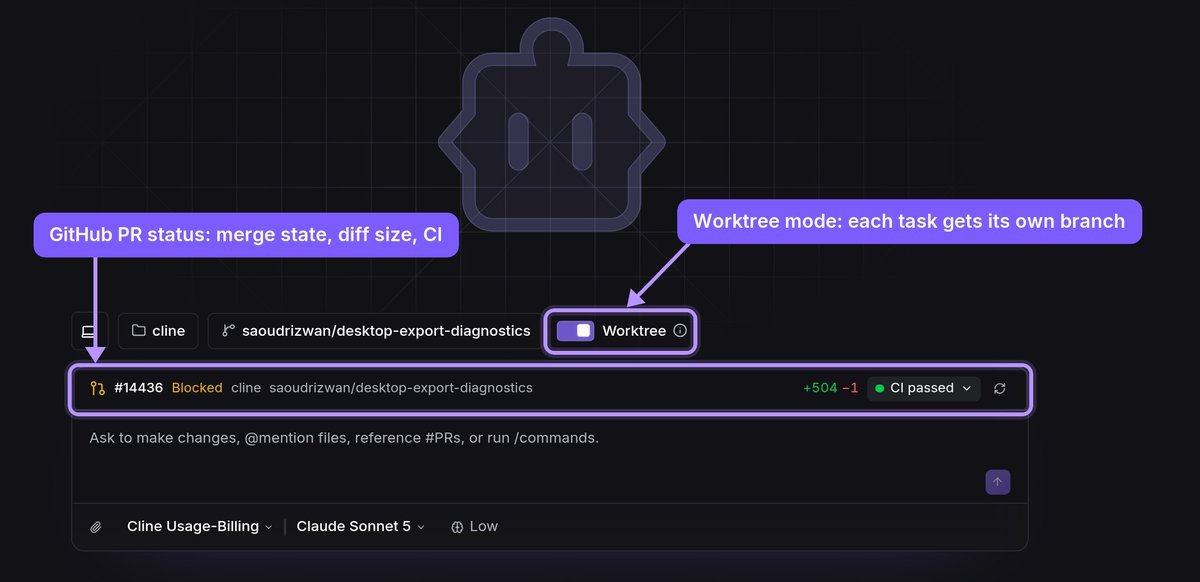
Summary: @cline made Stealth Bunny Alpha free in Cline—fast inference, strong coding, multimodal input, 1M context. Desktop v0.0.34 adds worktrees (per-task branches), GitHub PR status, and parallel subagents in a session.
Why it matters: Open/local coding agents keep chasing IDEs and cloud agents with free stealth models plus parallel repo workflows.
- Stealth Bunny: https://x.com/cline/status/2102857687491129485
- Desktop worktrees: https://x.com/cline/status/2102836411099676782