AI Twitter Highlights · 2026-09-23
AI Twitter/X Highlights Digest · 2026-09-23 (Wed)
Key Takeaways
- Claude Opus 5.5 ships as the first Claude 5.5-family model: Fable 5.1-class intelligence at ~40% lower run cost than Opus 5; it becomes the Claude Code default and lands in Cursor / Factory the same day.
- About 100 minutes later, GPT-6 Sol / Luna follow—coding and computer-use gains plus ~50% lower API prices; Devin turns them on immediately.
- OpenCode 2.0 talks about rewriting itself mid-session; Grok 4.7 hits day-two praise and critique; harness / Jev / Cline stay in the mix.
1. Claude Opus 5.5: first of the 5.5 family, default in Claude Code
Summary: @claudeai launched Claude Opus 5.5, the first model in the Claude 5.5 family—claiming Fable 5.1-level performance on most tasks at about 40% lower run cost than Opus 5. @trq212 highlighted clearer communication, better token efficiency, higher 5-hour rate limits, and a banked reset. @_catwu said it is now the default in Claude Code and the Claude app (including Cowork) for Pro / Max / Team, with medium effort as the product default. @bcherny compared HAProxy C→Rust ports: Opus 5.5 finished in ~9.5 hours vs Fable 5.1’s 12, at ~51% lower cost.
Why it matters: Price and default entry points moved together—coding-agent stacks flipped the same day as the model post.
- Launch: https://x.com/claudeai/status/2102435511222890900
- Anthropic: https://x.com/AnthropicAI/status/2102435703535939725
- Product notes: https://x.com/trq212/status/2102437686967738431
- Claude Code default: https://x.com/_catwu/status/2102437713781944397
- HAProxy experiment: https://x.com/bcherny/status/2102439069053747549

2. GPT-6 Sol / Luna: expanding the GPT-6 universe, cheaper
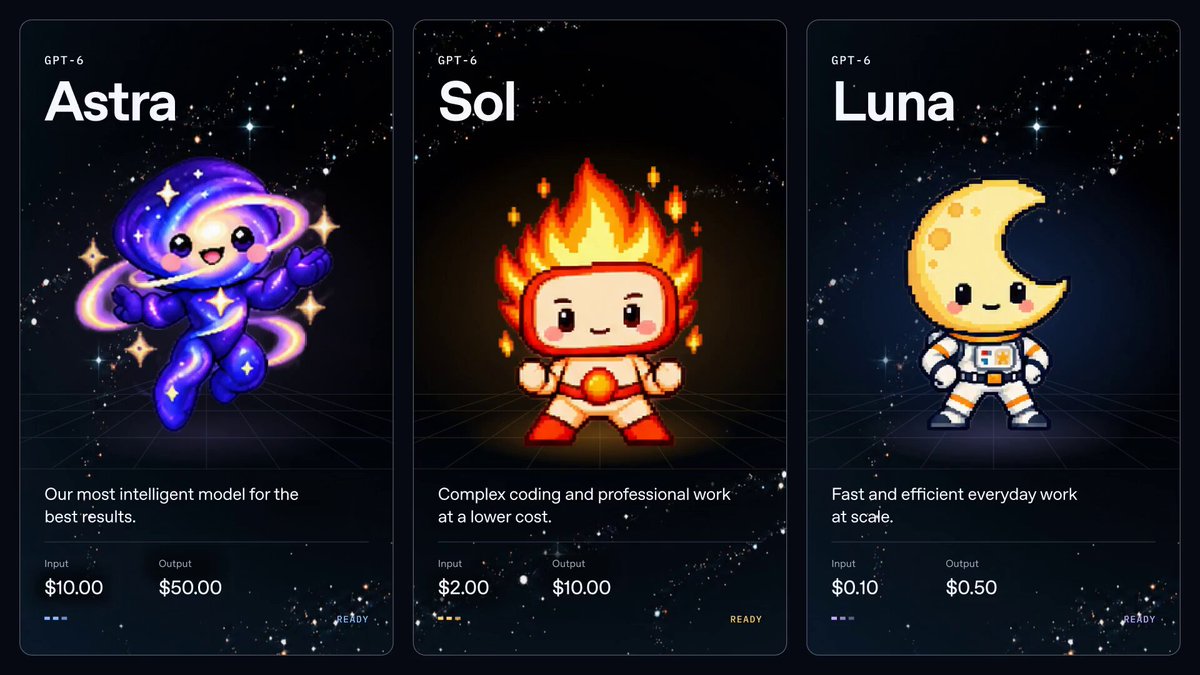
Summary: @OpenAI introduced GPT-6 Sol and GPT-6 Luna, packaging much of GPT-6 Astra’s strengths into faster, more affordable SKUs and cutting API prices ~50% vs GPT‑5.6 promo pricing. @sama called out gains in intelligence, alignment, work output, coding, and computer use—plus lower per-task cost. @thsottiaux stressed writing feel and banked resets for subscribers; @polynoamial put Luna near $0.10 / $0.50 per 1M tokens.
Why it matters: Same-day counter-programming to Opus 5.5, with the shared pitch of “stronger + cheaper + better for long agent runs.”
- Launch: https://x.com/OpenAI/status/2102460975790137662
- Feel + pricing: https://x.com/thsottiaux/status/2102463847714247142
- Coding / computer use: https://x.com/sama/status/2102464672519815512
- Price detail: https://x.com/polynoamial/status/2102464815751111057
3. Cursor: Opus 5.5 live, new CursorBench high
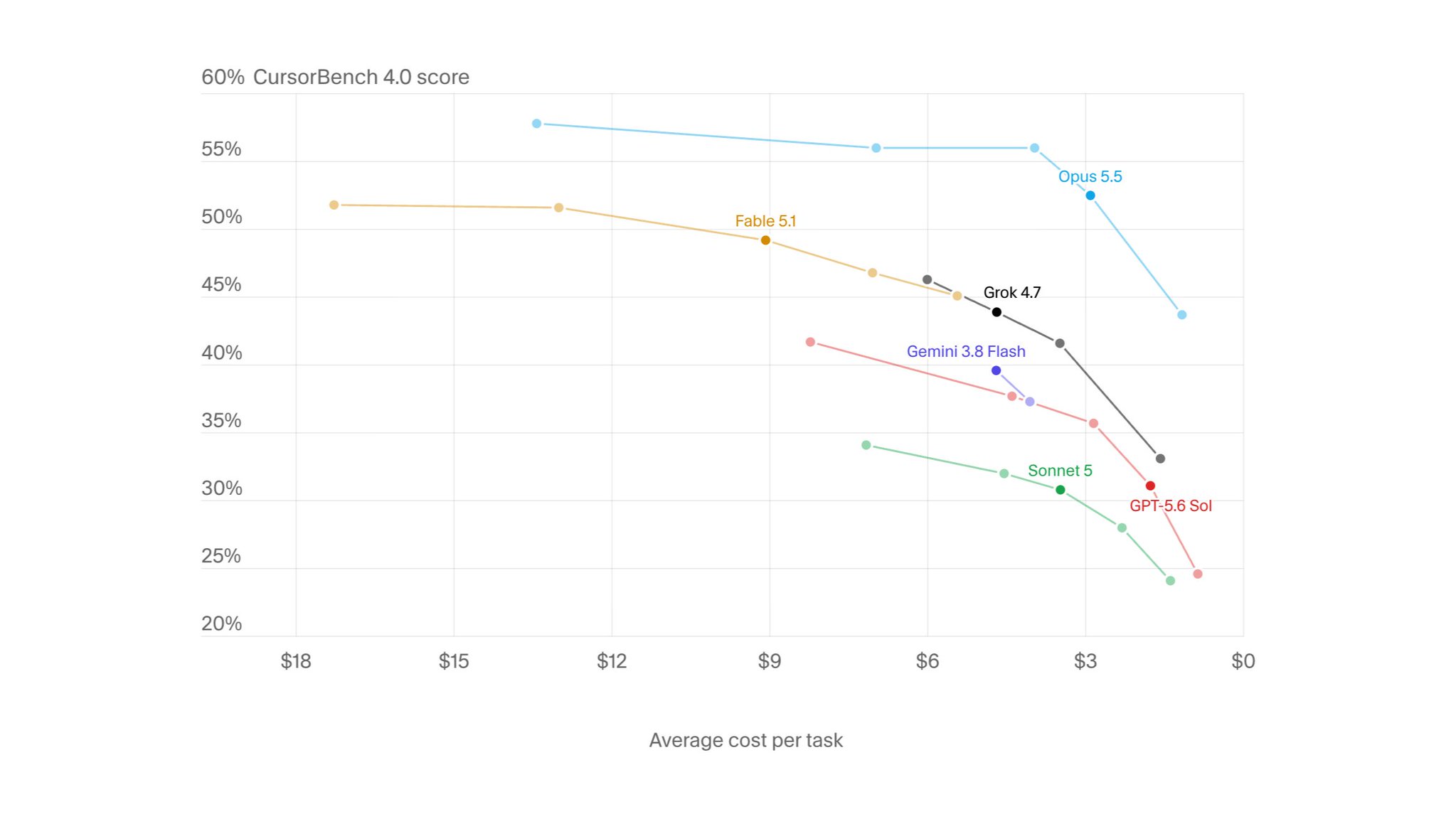
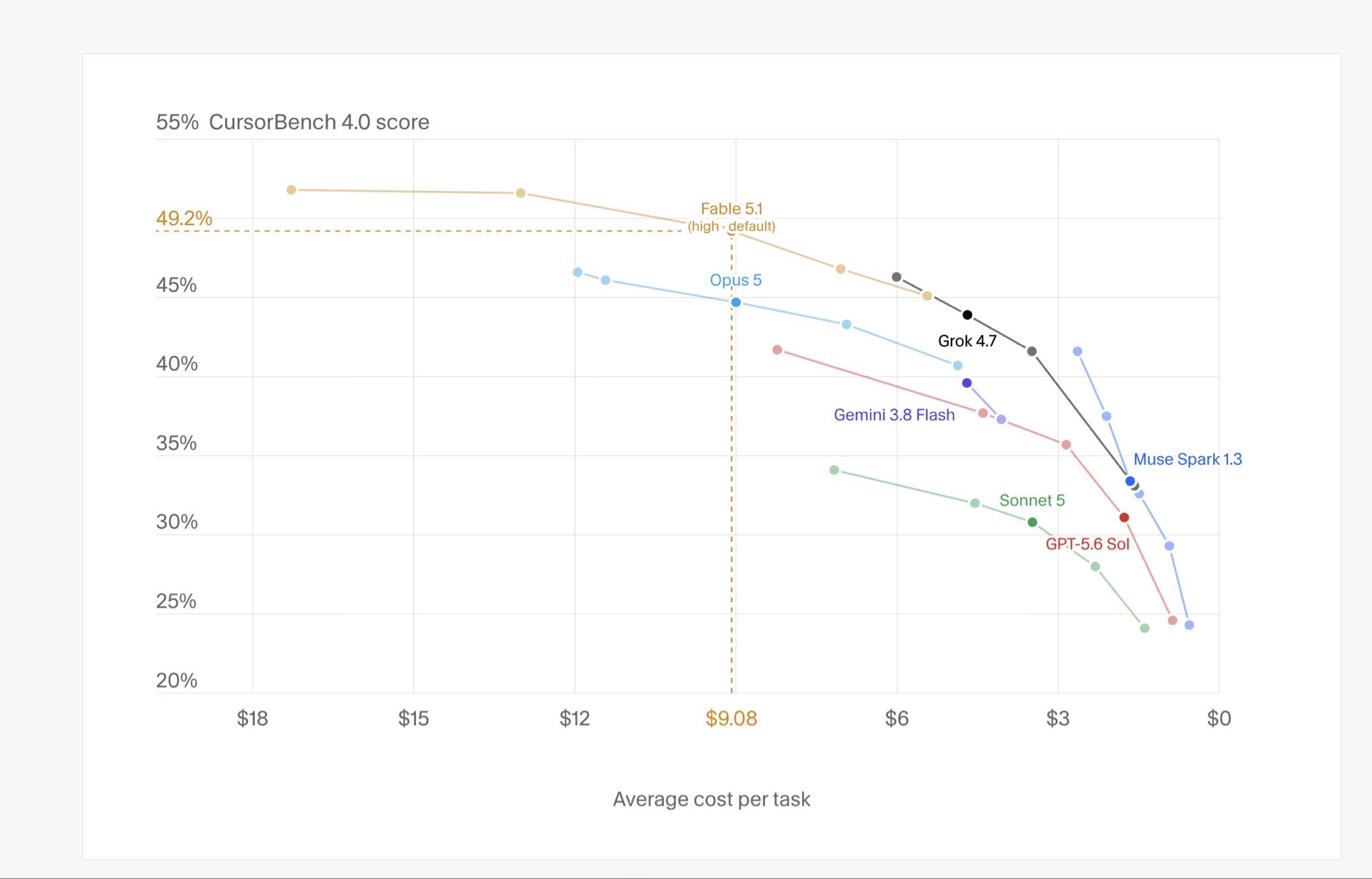
Summary: @cursor_ai said Claude Opus 5.5 is available in Cursor, topping CursorBench at 57.8% (Max) with ~40% lower cost per task than Opus 5. In Chinese Twitter, @MaiYangAI subtitled @poteto’s Cursor Compile talk and leaned on the “Michelin kitchen” metaphor over “software factory”—agents can cook, but the dish is still the chef’s.
Why it matters: IDEs absorb model launches with private benches, while practitioners keep teaching how humans supervise PR throughput.
- Opus 5.5 in Cursor: https://x.com/cursor_ai/status/2102448392773435706
- Compile with Chinese subtitles: https://x.com/MaiYangAI/status/2102344659276099794
4. Devin: GPT-6 Sol / Luna on FrontierCode cost curves
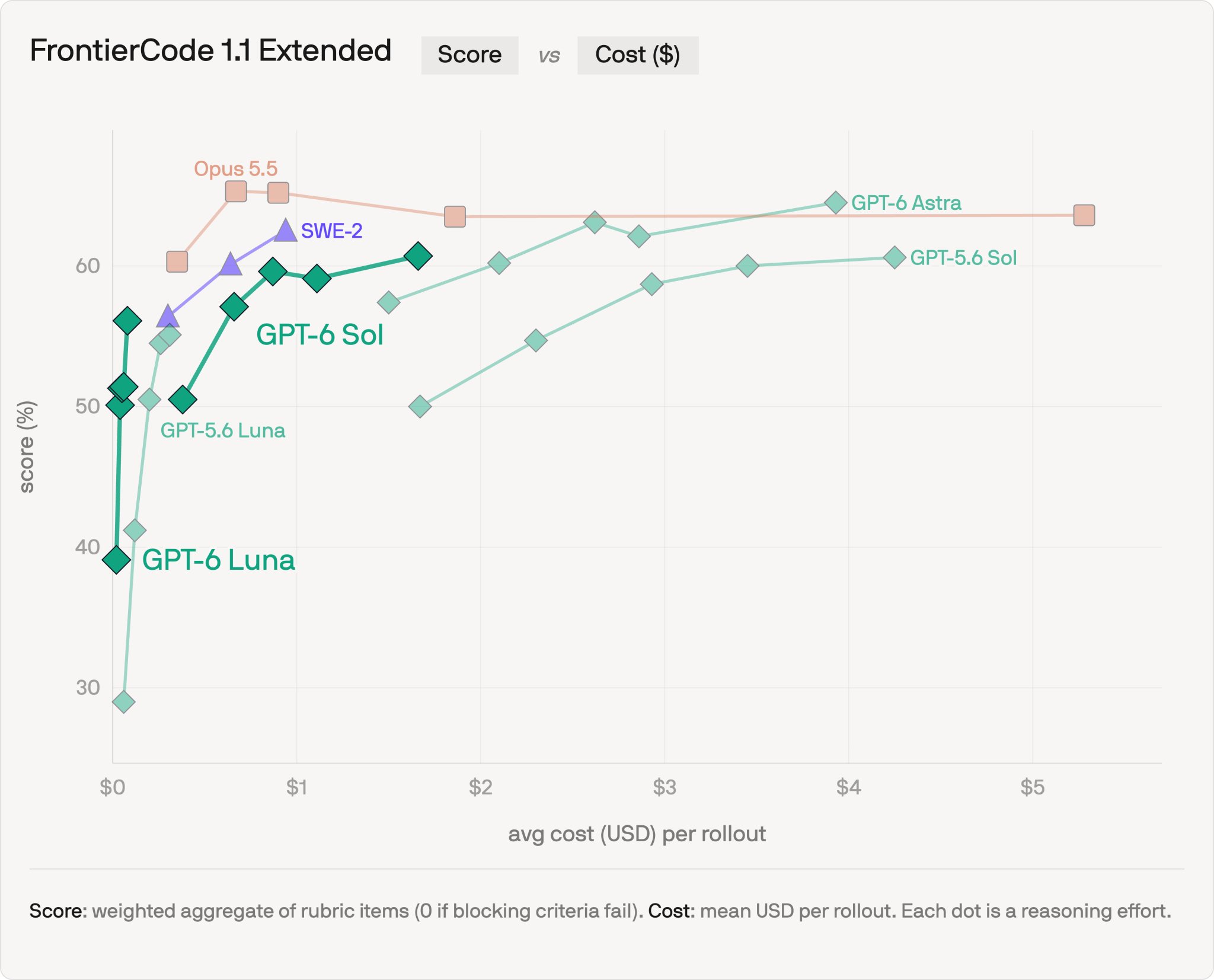
Summary: @cognition enabled GPT-6 Sol / Luna in Devin. On FrontierCode 1.1, Sol matches prior Sol score at ~61% lower cost per task; Luna beats prior Luna at roughly a quarter of the cost—claimed cheapest on the board at under $0.10 / task.
Why it matters: Cloud coding agents remain the day-two distribution layer, with evals framed as $/task.
- Link: https://x.com/cognition/status/2102463672224543018
5. OpenCode 2.0: rewrite yourself while the session runs
Summary: @thdxr shared kit’s write-up on how OpenCode 2.0 can modify itself in real time—even mid-session—and asked people to hunt easter eggs. Separately, @skywind3000 vented that in the terminal OpenCode feels weak, pi is hard, Codex is too barebones, so Claude Code remains default—open harness ≠ default UX.
Why it matters: Products are selling a hot-updatable harness, not only a model picker.
- OpenCode 2.0 post: https://x.com/thdxr/status/2102206622000967955
- Terminal comparison: https://x.com/skywind3000/status/2102377526656139274
6. Grok 4.7 day two: Tesla engineering story vs field critique
Summary: A day after launch, @elonmusk kept pushing Grok 4.7 + Build harness as a daily workhorse and said it is doing real engineering at Tesla. @theo’s long critique was harsher: worse token efficiency than 4.6, weaker on some benches, real-world cost potentially >2×, plus 2025-era frontend/3D gaps and stuck loops—calling the release disappointing.
Why it matters: Launch-day distribution gives way to harness narrative vs real bills and feel.
- Build harness daily use: https://x.com/elonmusk/status/2102412363332805078
- Tesla engineering: https://x.com/elonmusk/status/2102423241897705926
- Critique: https://x.com/theo/status/2102259624313549130
- Model card image: https://x.com/elonmusk/status/2102207241101144450
7. The harness sets the ceiling: ReFigBench and Managed Agents
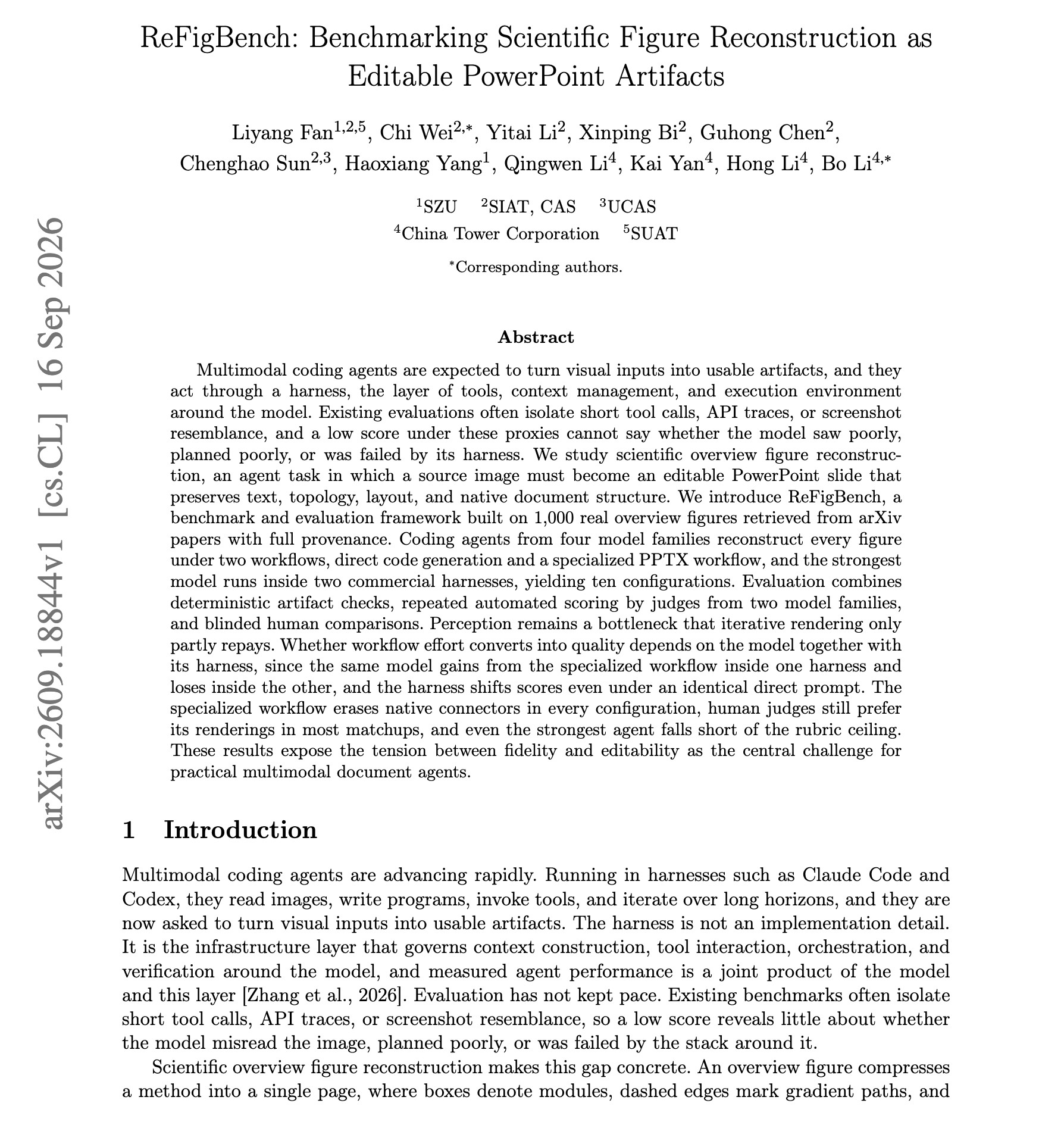
Summary: @omarsar0 highlighted ReFigBench: the same model (incl. GPT-5.5) can improve in one harness (Claude Code vs Codex) and worsen in another—even with identical prompts. DigitalOcean Managed Agents pitched hosting those harnesses with idle-CPU savings and 16k+ tools; @zachlloydtweets framed factories-as-code around multi-model, multi-harness, and data ownership.
Why it matters: On a dual-frontier launch day, the community zoomed in on the shell, not only the weights.
- ReFigBench: https://x.com/omarsar0/status/2102485592420606054
- Managed Agents: https://x.com/omarsar0/status/2102430254535233981
- Factory triad: https://x.com/zachlloydtweets/status/2102427795167322507
8. Factory / Capy: Opus 5.5 in Droid; PR speed vs Codex / Claude Code
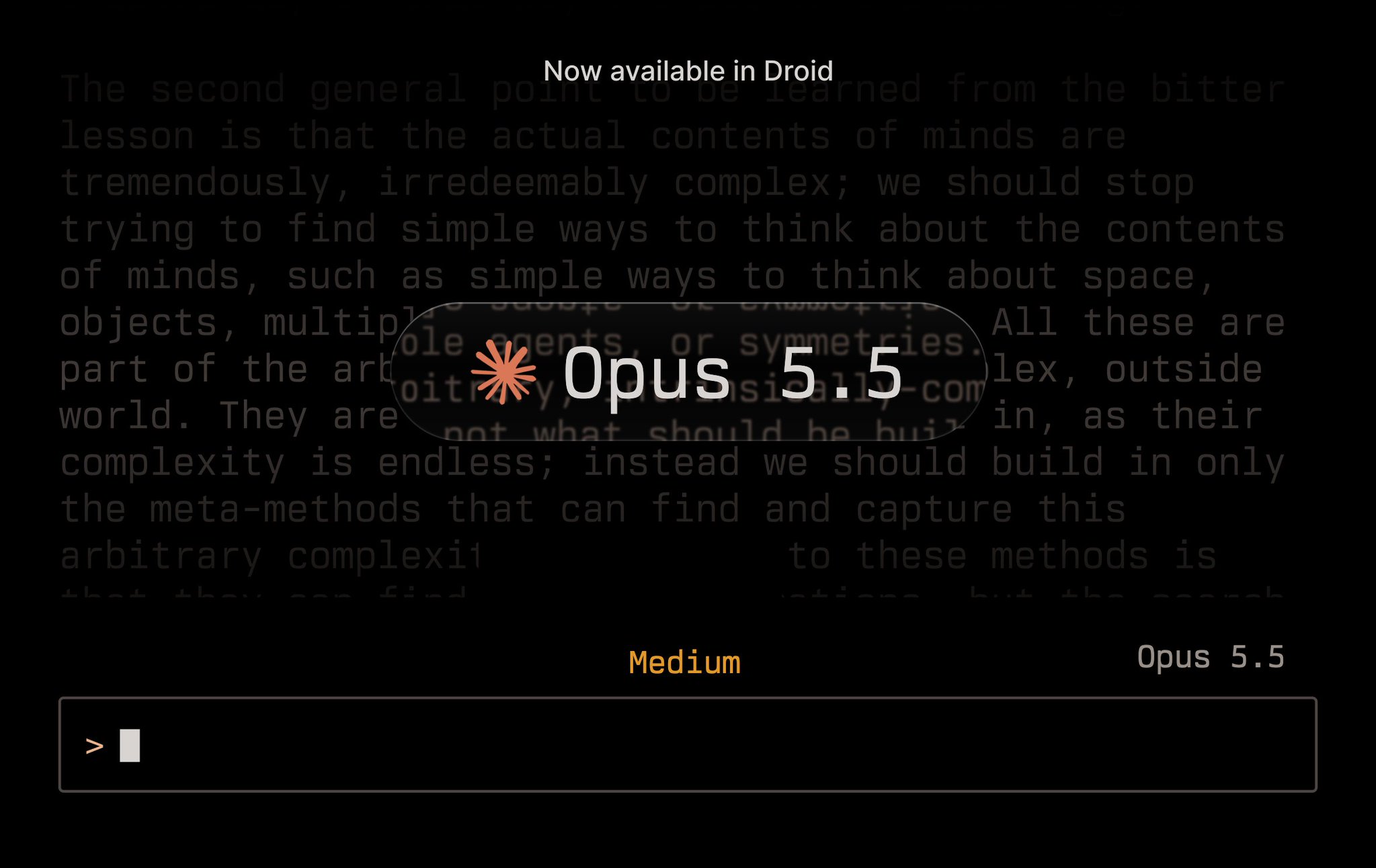
Summary: @FactoryAI said Opus 5.5 is live in Factory—Medium as a strong default, ~20–25% fewer output tokens at the same effort, clearer long investigations. @garrytan called out Capy for dropping PRs much faster than Codex or Claude Code alone.
Why it matters: Another landing path for new models—vertical software factories optimizing for merge speed.
- Factory: https://x.com/FactoryAI/status/2102439895109370349
- Capy: https://x.com/garrytan/status/2102544711647129902
9. Jev week: decision models from outreach to Gateway / LangSmith / Spring
Summary: Jev chatter continues. @vovudebosh claimed it can read a site, find prospects, email, and book calls. @rauchg said TypeSafe Jev is available over HTTP via AI Gateway; @openclaw covered decision models in core + plugins; @hwchase17 improved Jev UI in LangSmith; @starbuxman wrote up Spring AI + TypeSafe Jev for cheap structured decisions. @mitsuhiko joked about “classification” vs “decision” naming.
Why it matters: The story shifted from a cute zero-shot classifier to a default component inside gateways and agent graphs.
- Outreach use case: https://x.com/vovudebosh/status/2102303268261237131
- AI Gateway: https://x.com/rauchg/status/2102205684544852121
- OpenClaw: https://x.com/openclaw/status/2102488199486656862
- LangSmith UI: https://x.com/hwchase17/status/2102470464735949263
- Spring AI: https://x.com/starbuxman/status/2102402686612058486
10. Cline’s new look; Kimi’s browser extension glance
Summary: @cline refreshed the mascot two years after a hackathon icon—now framing the open coding agent as sitting on millions of machines. The same day, @Kimi_Moonshot relaunched WebBridge as the Kimi Browser Extension (sidebar browse / fill / act) and said Kimi K3 is on Amazon Bedrock for coding and long agent workflows.
Why it matters: Open harnesses invest in brand; Chinese model vendors keep shipping browser-side agents plus enterprise hosting.
- Cline redesign: https://x.com/cline/status/2102508032873943330
- Kimi extension: https://x.com/Kimi_Moonshot/status/2102372557190230244
- K3 on Bedrock: https://x.com/Kimi_Moonshot/status/2102244258531213596