AI Twitter Highlights · 2026-09-25
AI Twitter/X Highlights Digest · 2026-09-25 (Fri)
Key Takeaways
- OpenClaw cuts ~400k lines of its own tests with little coverage change via a test-audit skill, and ships 2026.9.6 (Opus 5.5 / GPT‑6 / Grok 4.7 + Jev).
- Claude Code vs Codex subscription feel flips again; Muse adds Mac computer use; OpenCode Desktop claims ~2M weekly actives.
- System One expands from Jev to CLM; Browser Use runs Luna→Jev poker; Devin ssh, Cursor Projects + pstack, Linear adaptive routing, and a Google harness distillation paper land the same day.
1. OpenClaw: ~400k LOC of tests deleted, plus 2026.9.6
Summary: @steipete said OpenClaw deleted about 400k LOC of its own tests with little change in coverage—modern models love writing tests for every tiny change even when they are not useful—and pointed to a test-audit skill (linked to the repo skill doc). Official @openclaw shipped 2026.9.6: Opus 5.5, GPT‑6 Sol/Luna, Grok 4.7, managed updates, restart recovery, 30-day usage, GitHub reader, remote Files/Memory/Skills, live meeting notes, and Jev + decision models.
Why it matters: Agent products are both absorbing new models and starting to claw back the “test tax” those models invent.
- Test-deletion thread: https://x.com/steipete/status/2103147927313199260
- 2026.9.6: https://x.com/openclaw/status/2102955928693989413

2. Claude Code vs Codex: the $200 plan feel flips again
Summary: @theo said the $200 Claude Code plan feels wildly better than Codex right now—weeks ago it was the other way around—and he is watching how OpenAI responds. Separately, @badlogicgames shared a habit from Claude Code Anonymous: skip bespoke review tools and inspect PRs in VS Code with real code nav/debugging.
Why it matters: Subscription tier + product harness “feel” still moves default tools more than a single leaderboard score.
- Claude Code vs Codex: https://x.com/theo/status/2103258221700067769
- VS Code review habit: https://x.com/badlogicgames/status/2103193213930496446
3. Muse: computer use on Mac, queue jobs and walk away
Summary: @alexandr_wang announced Muse for Mac now has computer use—queue jobs, walk away, and it keeps going. @garrytan amplified glowing coverage, calling Muse very impressive. Personal-agent narratives keep moving from chat boxes to “take the laptop.”
Why it matters: Computer use is shifting from a third benchmark axis into a default expectation for consumer agents.
- Mac computer use: https://x.com/alexandr_wang/status/2102916057006764370
- Reaction: https://x.com/garrytan/status/2102974165800399274

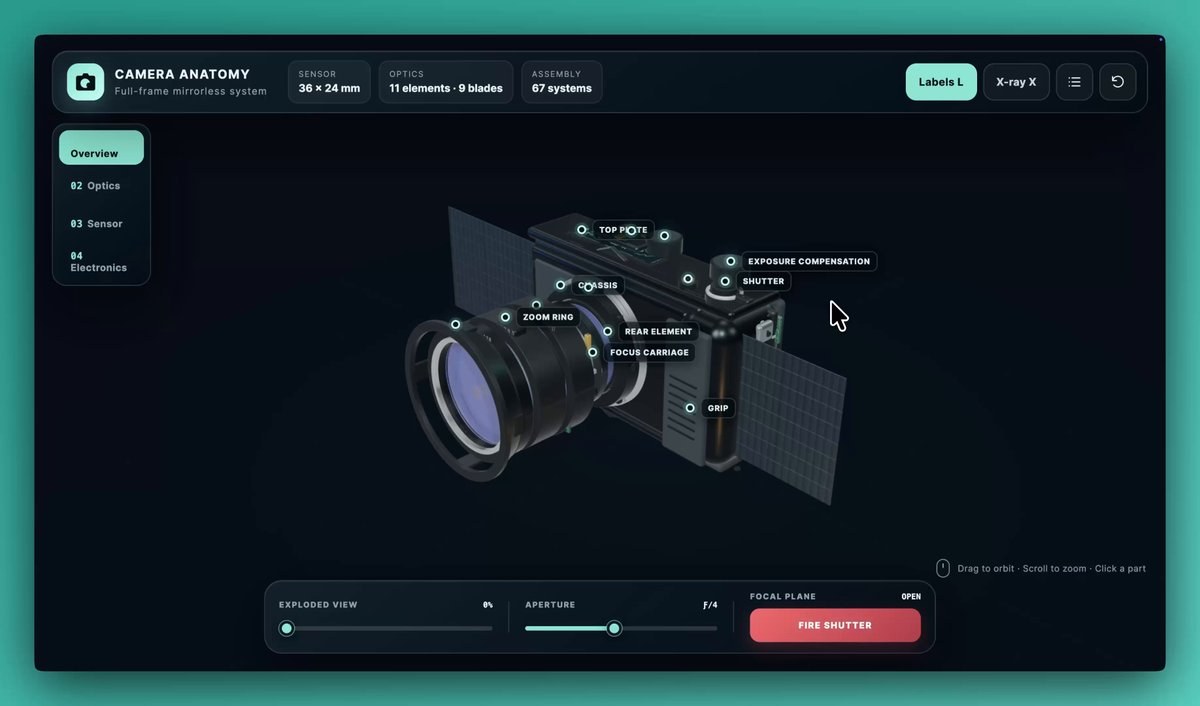
4. OpenCode: ~2M Desktop WAU, plus a free Space Bunny week
Summary: @thdxr said OpenCode Desktop has about 2M weekly active users—roughly half of TUI users. @omarsar0 tried free-for-a-week Space Bunny (1M context + image input): wireframe→landing page, moka-pot 3D, playable Three.js levels, and self-checking via browser screenshots before declaring done. Another post showed the plugin surface (e.g. GPT‑Live voice into a session).
Why it matters: Open-source coding agents are competing on real usage and visual/prototype demos, not just “we support model X.”
- Desktop WAU: https://x.com/thdxr/status/2102918818662342686
- Space Bunny: https://x.com/omarsar0/status/2103174241654837649
- Plugins: https://x.com/thdxr/status/2102986362970587464
5. System One: CLM after Jev, and Jev-as-a-Judge
Summary: @omarsar0 flagged a new wave for custom harness builders: after Jev, Contrastive Language Model (CLM)—claimed ~9× faster than Jev and a stronger verifier on long-horizon work. Jev is RLCD decision-shaped; CLM embeds situations and candidate actions contrastively. The same author pushed Jev-as-a-Judge: use a cheap judge when confident, escalate low-confidence calls to GPT‑6 / Opus 5.5.
Why it matters: Routing, gates, and evals are splitting off from “just another LLM call” into a dedicated System One layer.
- CLM vs Jev: https://x.com/omarsar0/status/2103139055013646646
- Jev-as-a-Judge: https://x.com/omarsar0/status/2102934356108972278
6. Browser Use: Luna plans, Jev acts, poker wins
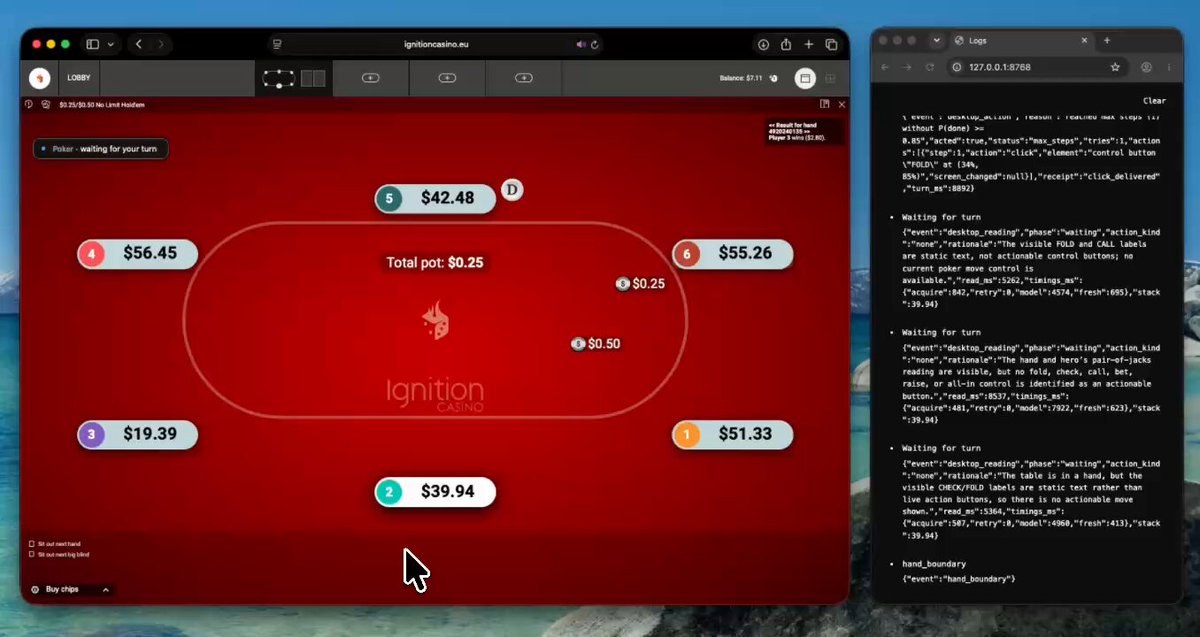
Summary: @browser_use posted a demo of Luna as planner and Jev as actor playing poker—and winning. Fast/cheap decision models are landing inside the browser-automation loop, not only on paper.
Why it matters: Browser use is moving from “swap the frontier model” to planner × System One actor stacks.
- Link: https://x.com/browser_use/status/2102980499614658580
7. Devin: devin ssh makes the cloud VM your box
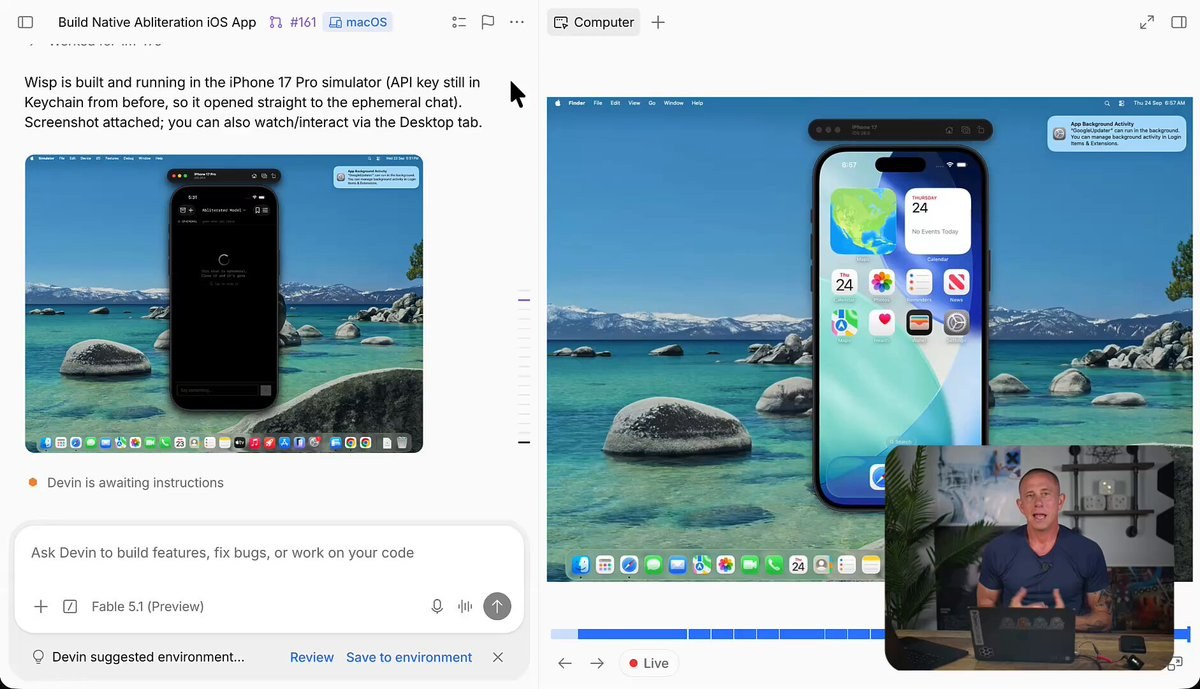
Summary: @dabit3 showed devin ssh: drop straight into the environment Devin is working in. Treat it like a server on macOS, Linux, or Windows; sharing the VM with Devin opens a larger design space.
Why it matters: Cloud coding agents are shipping shared, ssh-able machines—not only PRs.
- Link: https://x.com/dabit3/status/2103137532829687893
8. Cursor: Projects + pstack as a 10-way parallel desk
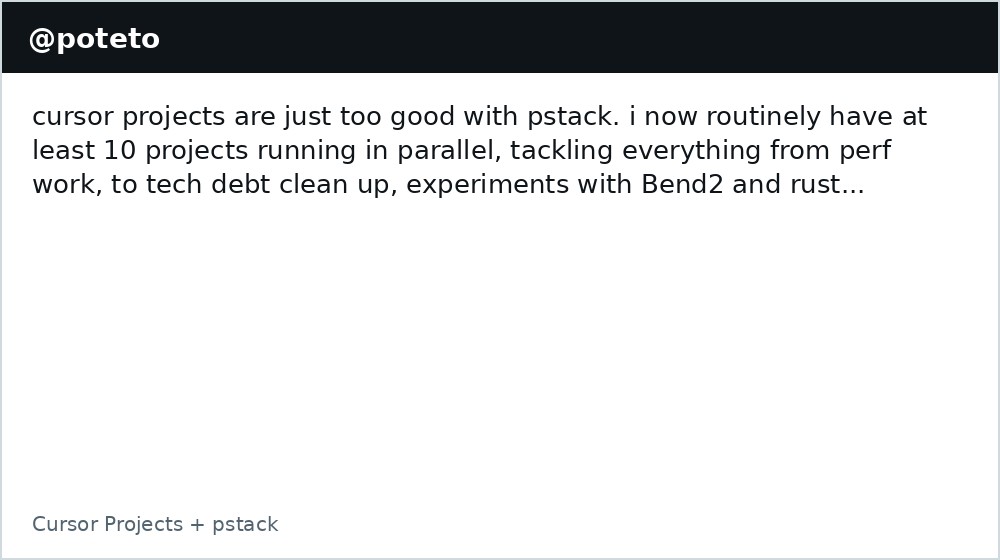
Summary: @poteto said Cursor Projects with pstack routinely runs at least 10 parallel projects—perf, tech debt, Bend2/Rust experiments, user feedback, dashboards, even games—joking about feeling like a “1000x engineer.” After yesterday’s token-bill talk, the chat pivots to orchestration itself.
Why it matters: The next IDE-agent tier is multi-session / multi-repo parallelism, not only a smarter single thread.
- Link: https://x.com/poteto/status/2103252563999232092
9. Linear: adaptive model routing for the coding agent
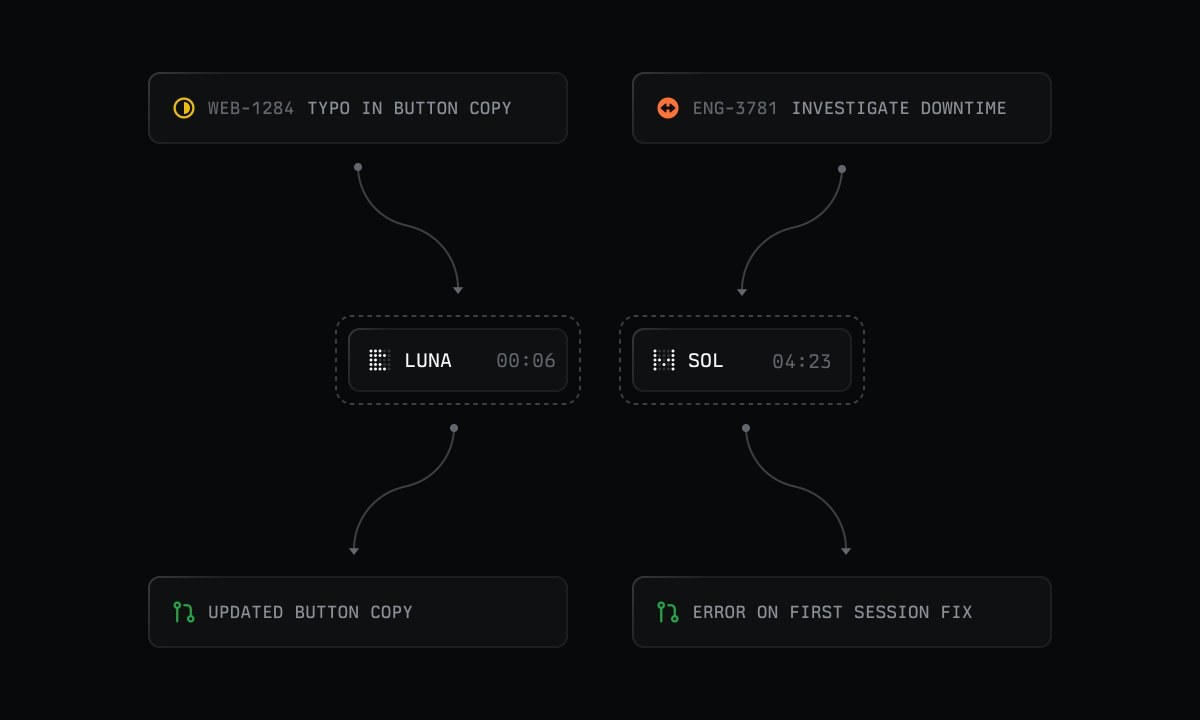
Summary: @linear launched Adaptive routing: the coding agent can auto-pick a model per issue—faster models for simple work, the default reasoning model for harder tasks. Co-founder @karrisaarinen stressed Claude / Codex / open-source options and called it the “Switzerland of coding agents.”
Why it matters: Issue-tracker-native agents are productizing model choice instead of leaving users to hand-roll routers.
- Official: https://x.com/linear/status/2103157473691787665
- Co-founder note: https://x.com/karrisaarinen/status/2103161440014393726
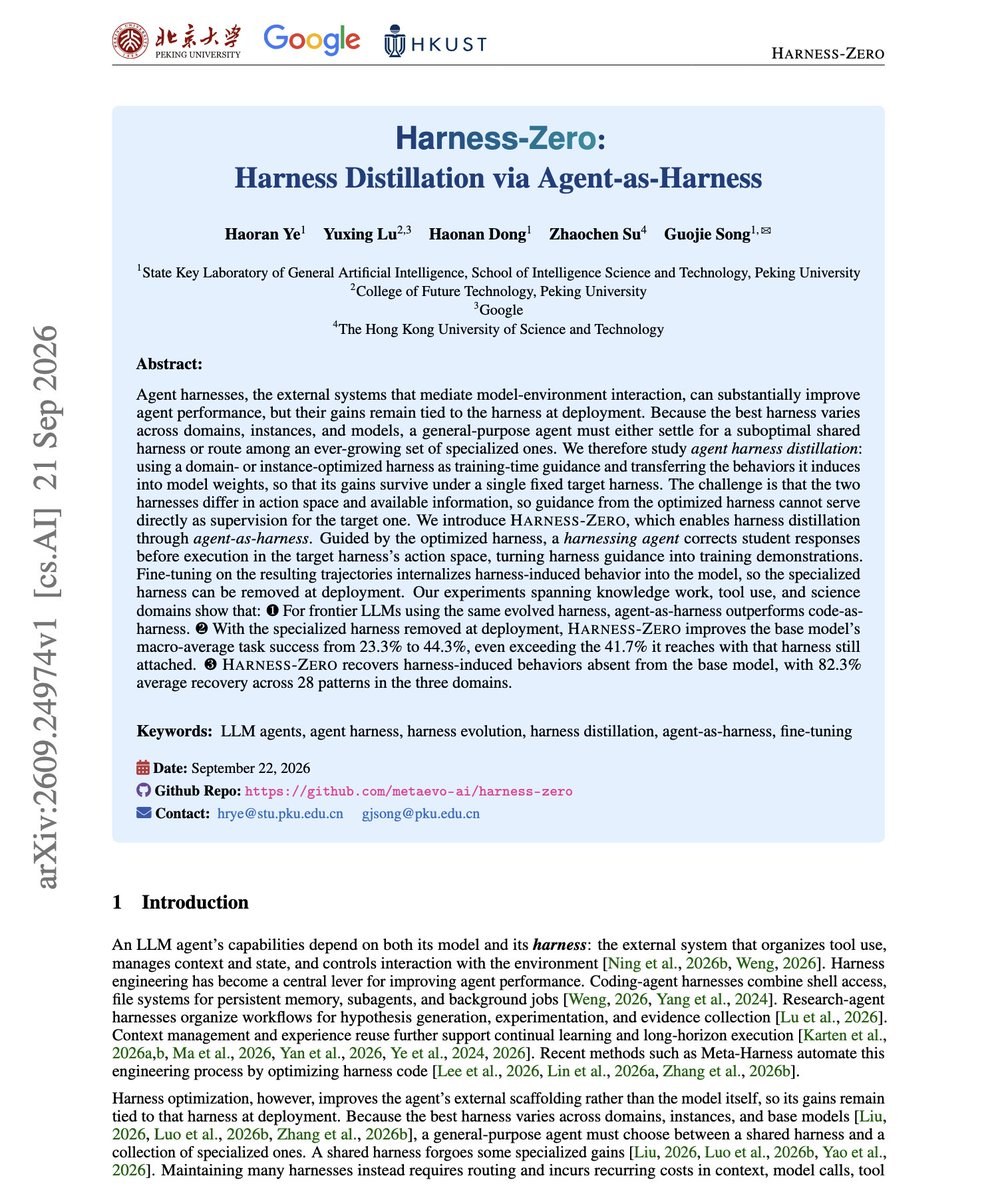
10. Harness distillation: Google et al. on Harness-Zero
Summary: @omarsar0 highlighted a Google-and-colleagues paper on whether you can distill an agent harness. With the specialized harness removed, macro-task success rose from 23.3% to 44.3%—above the 41.7% base model + harness baseline. Harness-Zero uses the optimized harness only in training; when train/deploy action spaces differ, a harnessing agent corrects student outputs into the deploy space before those runs become demos. Across 28 harness-induced behaviors, about 82.3% were recovered on average; agent-as-harness also beat code-as-harness for frontier models on the same evolved harness.
Why it matters: After warnings that self-improving harnesses can overfit, the community is asking whether the shell itself can be distilled into the model.
- Link: https://x.com/omarsar0/status/2103095360239636666