AI Twitter/X Hots Digest · 2026-11-07 (Saturday)
Today’s highlights
- Expensive model as manager, cheap model as worker keeps getting written as a playbook: OpenCode has Opus delegate to DeepSeek subagents, with Docker for a remote control plane.
- Privacy and memory heat up together: Claude Code is accused of stuffing the login email into outbound
User-Agent; Anthropic explains agent memory via “dreaming.” - Control planes keep expanding: T3 Code sells phone-driven multi-experiment runs; Devin lists 20 capabilities including third-party ACP agents; Aseprite and Arc plug coding agents into pixel art and onchain work.
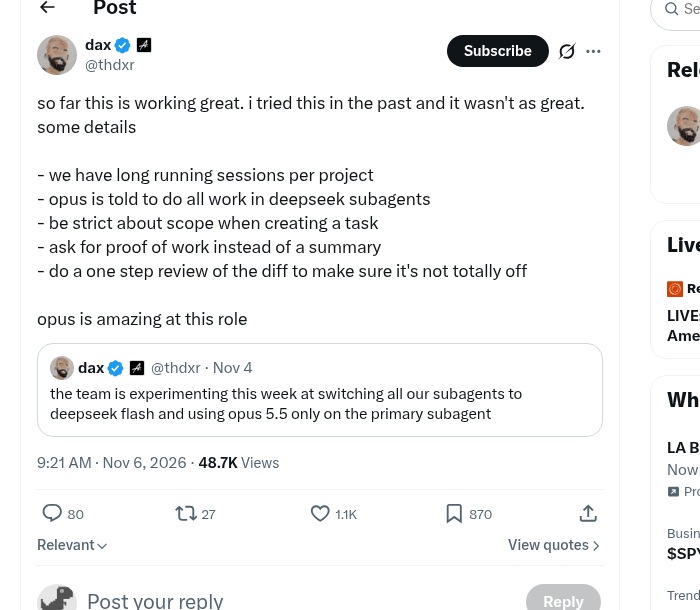
1. OpenCode: Opus delegates to DeepSeek subagents; server runs in Docker
Key points: @thdxr shares a working long-session setup — one long-running session per project, with Opus told to do all work in DeepSeek subagents: keep task scope strict, ask for proof of work instead of a summary, then do a one-step diff review. His line: “opus is amazing at this role.” Same day: run opencode server in Docker (serve --hostname 0.0.0.0 --port 4096) and connect from the TUI / desktop.
Why it matters: Turns “frontier model plans, open/cheap models grind” into a copyable OpenCode workflow, with a containerized remote control plane.
- thdxr: Opus → DeepSeek subagents: https://x.com/thdxr/status/2118755687274532893
- thdxr: Docker opencode server: https://x.com/thdxr/status/2118763115953213831
2. T3 Code: parking-lot phone dispatch, and a rebuttal to “wastes tokens”
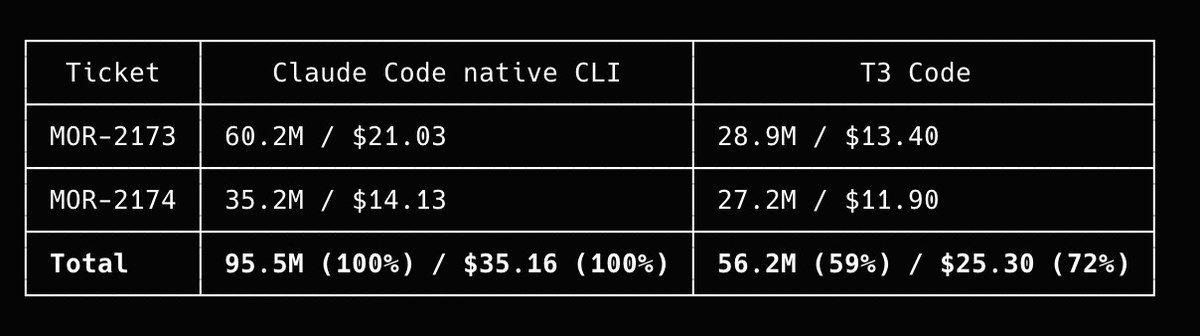
Key points: @theo quotes @texoport__ — walking a parking lot, yapping into T3 Code on a phone, while agents ran ~40 GCP experiments for ~5 hours — and says “This is why we built T3 Code.” Later he pushes back on “T3 wastes tokens”; the quoted post claims ~40% average usage savings. Chinese threads also describe migrating off Grok Bot / Cursor quota anxiety onto a T3 stack.
Why it matters: Frames T3 as phone-remote multi-agent product narrative, and answers cost criticism head-on (distinct from yesterday’s T3×Grok Bot angle).
- theo: This is why we built T3 Code: https://x.com/theo/status/2118668096965861448
- texoport__: parking-lot phone dispatch: https://x.com/texoport__/status/2118516088912941131
- theo: token-waste rebuttal: https://x.com/theo/status/2118831869567647810
- aarondelasy: ~40% usage savings: https://x.com/aarondelasy/status/2118831501722972295
3. Claude Code: login email in the HTTP User-Agent (privacy incident)
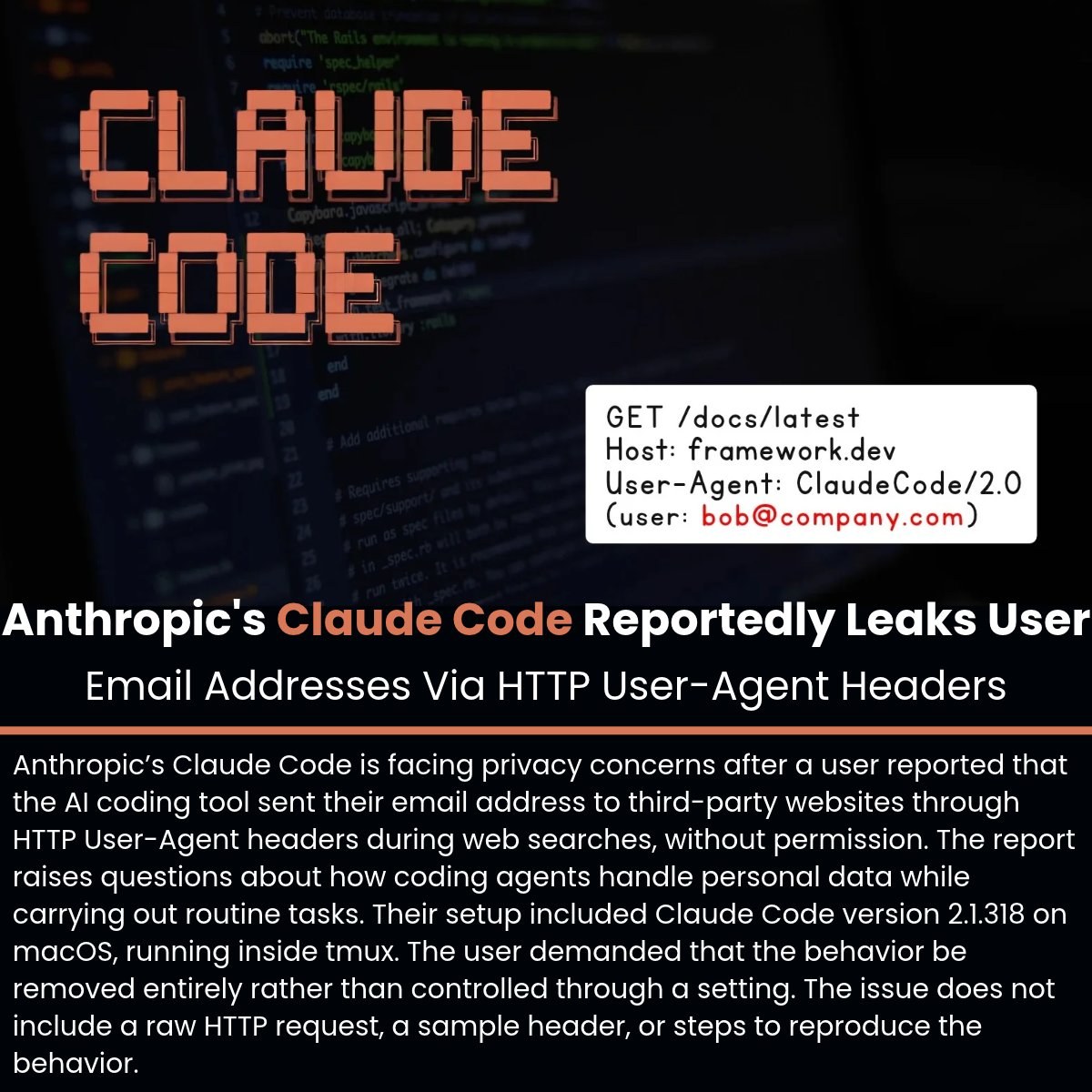
Key points: Multiple threads point at the same issue: during web search / outbound requests, Claude Code put the login email into the HTTP User-Agent, visible to third-party sites. Security media and builders amplified it; practical advice is to upgrade and watch Anthropic’s fix language around removing the email from model context. Treat details as issue / official-response scoped — not a “whole vault leaked” story.
Why it matters: When coding agents egress on their own, identity living in context becomes a supply-chain privacy surface — sharper than another feature drop.
- The_Cyber_News: User-Agent email leak: https://x.com/The_Cyber_News/status/2118716305243312209
- CR1337: discussion + screenshots: https://x.com/CR1337/status/2118538550904021001
- Austen: builder digest including this: https://x.com/Austen/status/2118680123654189164
4. Anthropic: Claude Memory and “dreaming” engineering post
Key points: @AnthropicAI explains how memory lets Claude learn from experience, and how “dreaming” helps organize what it learned, correct mistakes, and find things faster next time. @omarsar0 follows up that memory remains one of the biggest levers in a harness — keep it simple and mix in episodic memory.
Why it matters: Officials move agent memory from slogan to engineering narrative, matching the community’s “don’t forget across sessions” anxiety.
- AnthropicAI: The components of agent memory: https://x.com/AnthropicAI/status/2118814753154064501
- omarsar0: memory leverage in harnesses: https://x.com/omarsar0/status/2118838318180037041
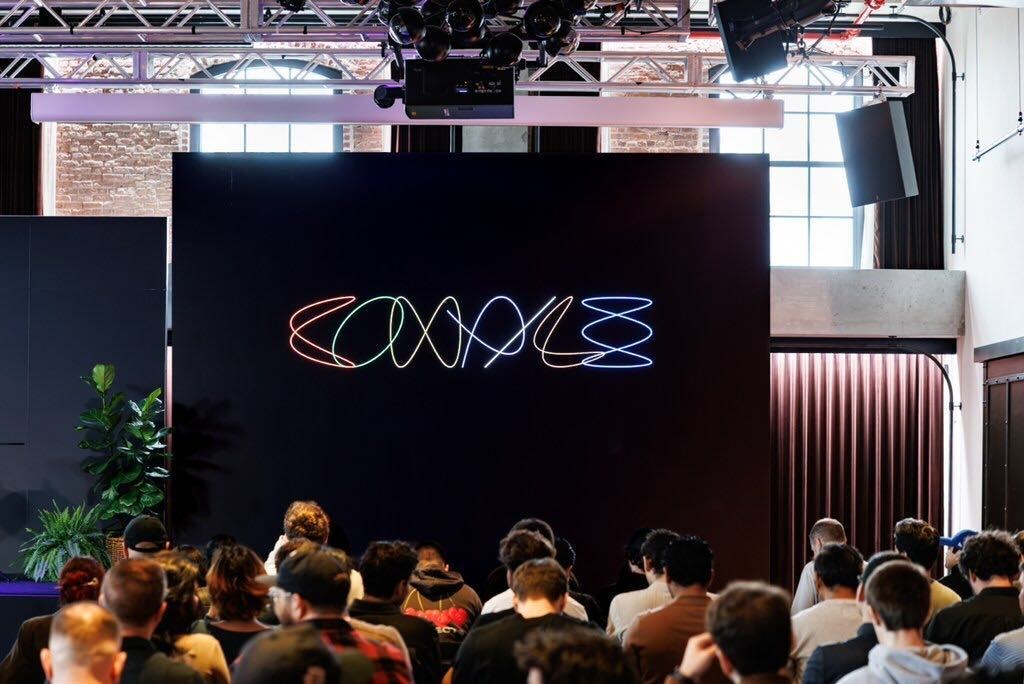
5. johnbai at Compile NYC: Grok Bot from personal assistant to team tool
Key points: @johnbai wraps Compile NYC with Building Something Worth Using — a look back at early Grok Bot design iterations, and a look forward to evolving the personal assistant into something entire teams can use; multiple stage photos. Chinese digests flagged it as the day’s strongest on-site signal.
Why it matters: Live event + product lead saying “personal → team” is more citable than second-hand roundups (not a rerun of yesterday’s T3×Grok Bot combo posts).
- johnbai: Compile NYC wrap: https://x.com/johnbai/status/2118750928035569738
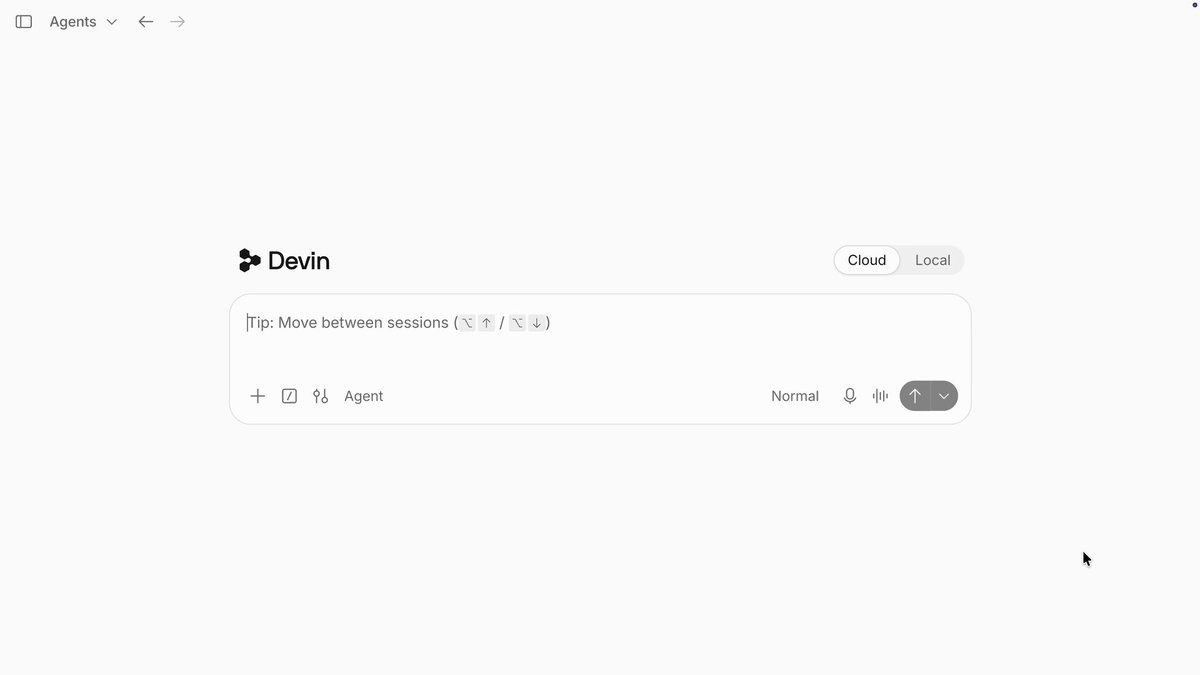
6. Devin / Devin Desktop: official “20 things you might not know”
Key points: @devindevelopers posts a long feature tour: Local Hands (cloud driving your machine), Element Picker, mobile VMs, Session Branching, Memory, Skills, Sandbox, Local/Cloud Handoff, plus running Claude Code / Codex and 40+ ACP agents inside the desktop, and an Agent Command Center.
Why it matters: Officially reframes Devin Desktop from “one cloud agent” into a local + cloud + third-party ACP console.
- devindevelopers: 20 things / Local Hands: https://x.com/devindevelopers/status/2118851585707053162
- devindevelopers: Third-party ACP agents: https://x.com/devindevelopers/status/2118851625255416110
- devindevelopers: Agent Command Center: https://x.com/devindevelopers/status/2118851618456174879
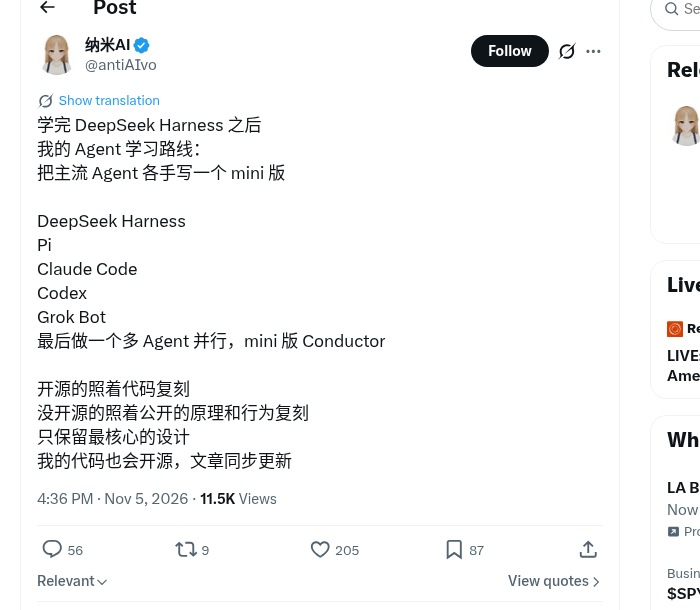
7. Hand-roll mini harnesses: DeepSeek / Pi / Claude Code / Codex / Grok Bot → mini Conductor
Key points: @antiAIvo sketches a learning path — hand-write mini versions of DeepSeek Harness, Pi, Claude Code, Codex, and Grok Bot, then a multi-agent mini Conductor; clone open-source from code, closed products from public principles, and open-source the results. Chinese replies echo that cloning the orchestration layer beats stacking more subscriptions. Meta’s Conductor acquisition is yesterday’s backdrop; this is a learn-by-building response.
Why it matters: Flips “subscription stacking” into a harness curriculum, treating orchestration as an engineering object you can study.
- antiAIvo: agent learning path: https://x.com/antiAIvo/status/2118502776393355437
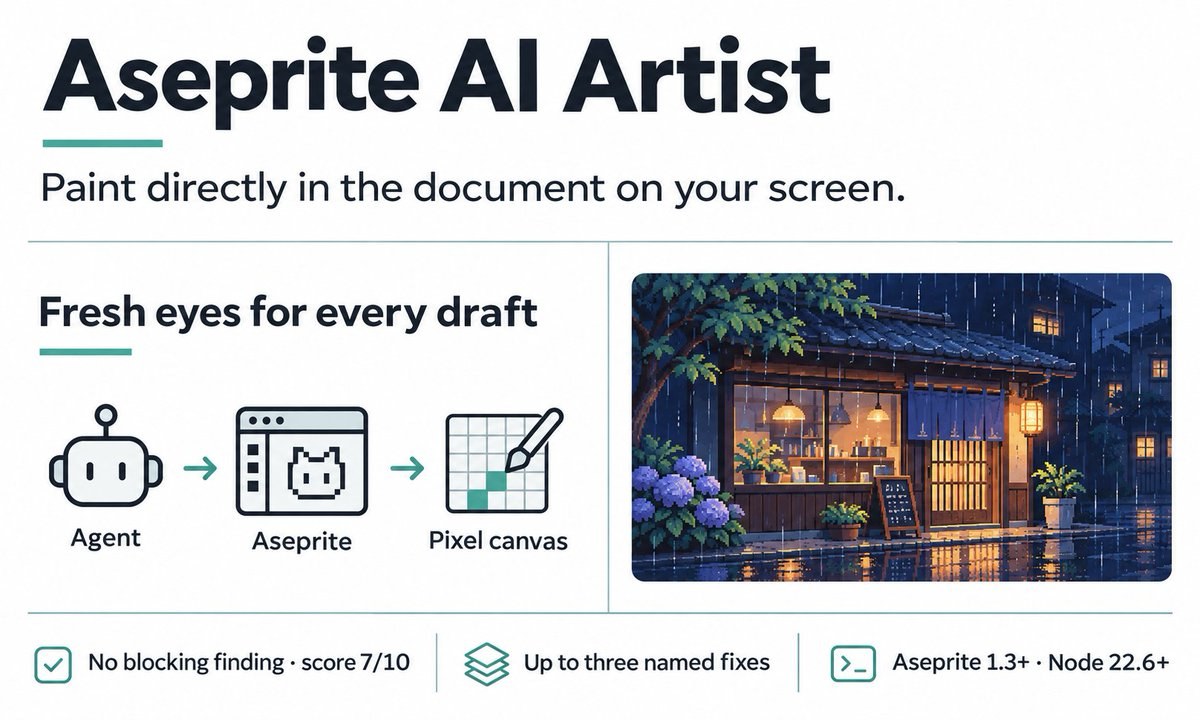
8. Aseprite AI Artist: MCP lets coding agents paint inside Aseprite
Key points: @dextune introduces Aseprite AI Artist — an MCP server + extension so Claude Code / OpenCode / Codex / Gemini CLI / Cursor / VS Code / Windsurf can paint pixel-by-pixel in an already-open Aseprite window, with a critic agent scoring drafts; knowledge base includes rules, pixel templates, and many palettes. GitHub with-pebbly/aseprite-ai-artist has created_at ~2026-09-08 (hundreds of stars) — today’s posts are product promotion, not a past-24h open-source debut.
Why it matters: Classic MCP landing: agents leave the editor and enter a specialized creative tool; bookmark/like ratio is high.
- dextune: Aseprite AI Artist: https://x.com/dextune/status/2118516217032098248
9. Arc Studio CLI: hand off onchain work from your coding agent
Key points: @arc launches the Arc Studio CLI so Claude Code / Codex / Cursor can hand off onchain work — inspect the sandbox, review results, and pull code back into the project.
Why it matters: Crypto/onchain workflows attach to existing coding agents instead of inventing another IDE.
- arc: Arc Studio CLI: https://x.com/arc/status/2118543528536183176
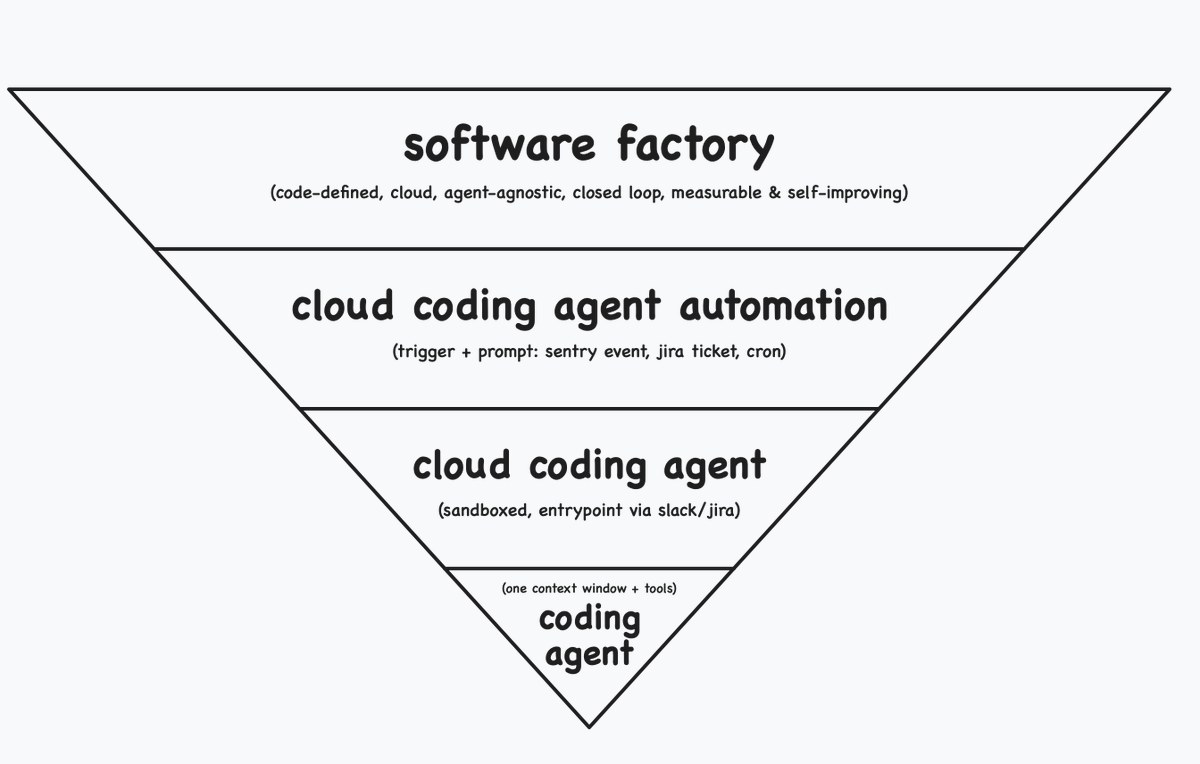
10. Zach Lloyd: coding-agent glossary + diagram
Key points: @zachlloydtweets posts a glossary separating coding agent, cloud coding agent, automation, and software factory, then a follow-up “in diagram form” to align vocabulary.
Why it matters: When agent / harness / control-plane language is muddled, one diagram becomes a conceptual anchor for the digest.
- zachlloydtweets: glossary: https://x.com/zachlloydtweets/status/2118725953966715217
- zachlloydtweets: diagram: https://x.com/zachlloydtweets/status/2118814452791578843