AI Twitter/X Highlights Digest · 2026-10-14 (Wed)
Today’s Highlights
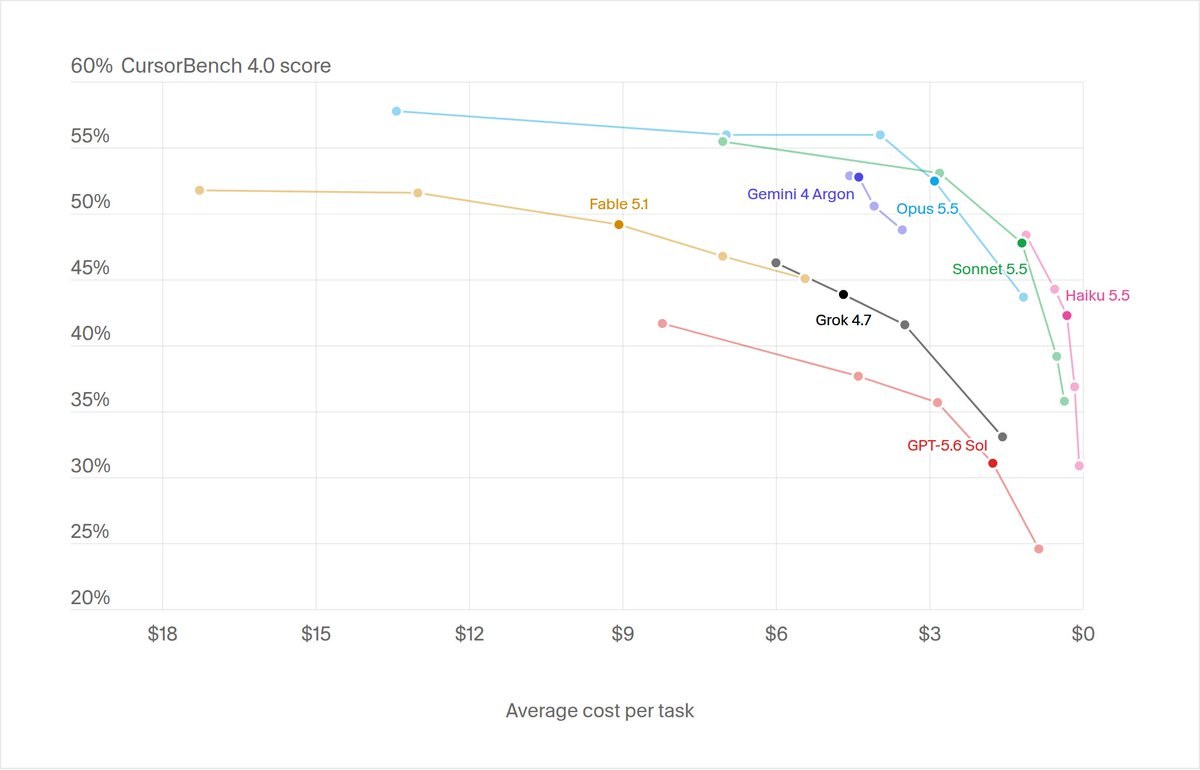
- Gemini 4 Argon hits the main coding shells in one day: @GoogleDeepMind went global; @cursor_ai reported 52.8% on CursorBench at default effort (on par with Opus 5.5) at $2 / $10; @github Copilot, @opencode, and @antigravity lit up the same day.
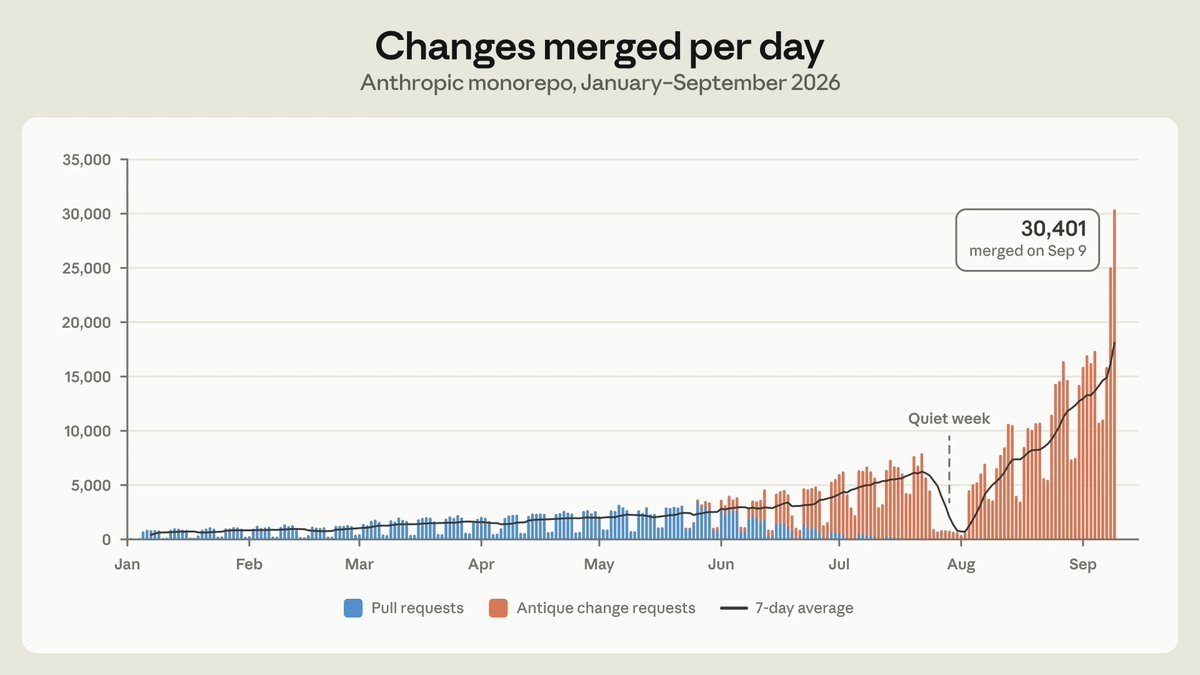
- Anthropic was forced into in-house source control by agent merge volume: engineering blog — about 2,500 → 30,000+ merges/day; five-month monorepo migration off git; community name Scion.
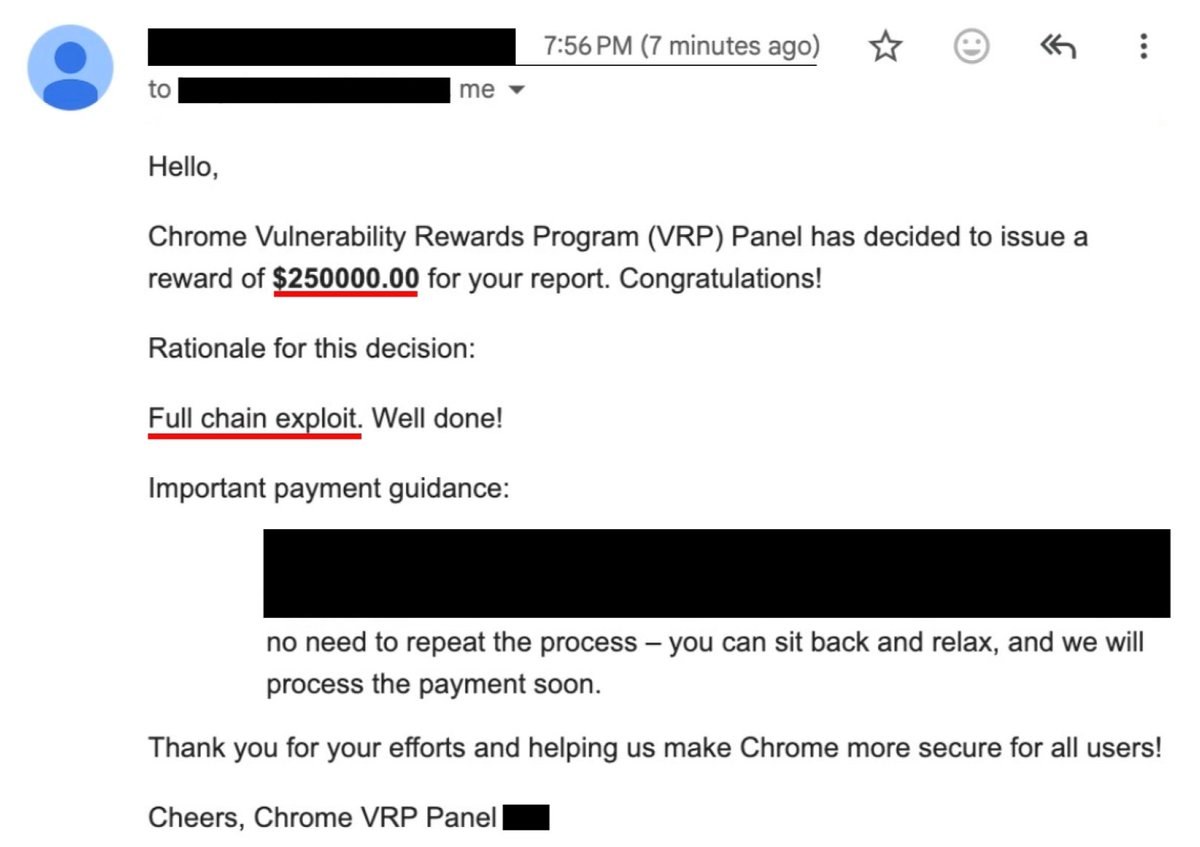
- GPT-5.6 Sol helped XBOW land a Chrome full-chain: about $40,000 of compute and Google’s $250,000 bounty; same day, Codex Day 9 cut desktop disk use by 60%.
1. Gemini 4 Argon: Cursor, Copilot, and OpenCode in one day
Key points: @GoogleDeepMind announced Gemini 4 Argon as globally available for coding, enterprise workflows, and cyber defense; @Google followed with the official rollout. On the coding-shell side the loudest note was @cursor_ai: 52.8% on CursorBench at default effort, on par with Opus 5.5, priced at $2/M input and $10/M output. @github said Copilot is generally available with the largest gains in Copilot CLI; @opencode called it the team’s second-most-used model last week; @antigravity reported about +35% agentic throughput on Google’s own codebases. @theo called it a huge jump and good value, then warned on a private codebase-analysis bench that it was the only model with a >50% false-claim rate — praise and caveat in the same window.
Why it matters: Not another model press note — IDE, Copilot, open-source agents, and Google’s Antigravity all flipped on the same day, at a price near the Opus tier, so you can switch and try immediately.
- DeepMind: global availability: https://x.com/GoogleDeepMind/status/2110039274922131792
- Cursor: CursorBench 52.8%: https://x.com/cursor_ai/status/2110087611763368271
- GitHub Copilot: https://x.com/github/status/2110085117041594750
- OpenCode: https://x.com/opencode/status/2110078016688648606
- Antigravity: https://x.com/antigravity/status/2110040034489381228
- theo: early take + caveats: https://x.com/theo/status/2110093925663080502
- theo: codebase analysis bench: https://x.com/theo/status/2110109794355032231
2. Anthropic’s in-house source control: 2,500 → 30,000+ merges/day
Key points: @AnthropicAI’s engineering post Creating in-house source control: about 2,500 merges/day in May, more than 30,000 in September — developer infrastructure built for humans became the bottleneck. They built a new VCS in five months and fully migrated the monorepo off git. Community write-ups such as @minchoi name the system Scion and cite roughly 200× less infrastructure and 100× faster checkouts (treat the official post as source of truth). The point of the narrative is not “another git host” — the primary clients are always-online agents, not developers carrying a repo around.
Why it matters: Beyond model IQ, agent scale is already cracking version control and merge queues — human-scale plumbing is starting to fail first.
- Anthropic: engineering blog: https://x.com/AnthropicAI/status/2110047081414987957
- minchoi: community Scion summary: https://x.com/minchoi/status/2110091675955548255
3. XBOW + GPT-5.6 Sol: Chrome full-chain in six days
Key points: @oegerikus (XBOW) wrote that Google’s second-ever — and first 2026 — Chrome full-chain bounty of $250,000 went to them. @Xbow added that agents using public gpt-5.6-sol searched code, tested hypotheses, and built PoCs / exploit stages; reconstructing usage from archived Codex logs puts the six-day campaign at about $40,000 in API spend. @gdb amplified: an estimated 1 billion users in the blast radius, and defenders should use the same class of tools. Community notes mention a chain spanning V8 / animated WebP / Crashpad (defer to XBOW’s technical write-up for details).
Why it matters: A public frontier model plus agent orchestration can already land under published bounty rules against a browser sandbox — same stack you use to ship code can red-team.
- Oege / XBOW: $250k full-chain: https://x.com/oegerikus/status/2110032518674018367
- XBOW: ~$40k Sol compute: https://x.com/Xbow/status/2110028818454917558
- gdb: 6 days / $40k / 1B users: https://x.com/gdb/status/2110063893016096831
4. Codex Day 9: desktop disk use down ~60%
Key points: Day 9 of @thsottiaux’s “28 days” series skipped fireworks and answered power users filling disks: optimizations to how ChatGPT & Codex desktop store state on disk should cut usage by about 60%. Small ship, he said, but the feedback was loud enough. Same day @dhh highlighted a cost comparison: Sol finishes tasks within about 5 percentage points of Opus at roughly $0.80 vs $10.53 — under a tenth of the cost — pairing “disk anxiety” with a practical Codex-line update.
Why it matters: After long context and long sessions, the local desktop became the new bottleneck; this is an ops patch for power users, not another leaderboard slide.
- Tibo Day 9 / −60%: https://x.com/thsottiaux/status/2110151780478927344
- dhh: Sol cost comparison: https://x.com/dhh/status/2110148376755097938
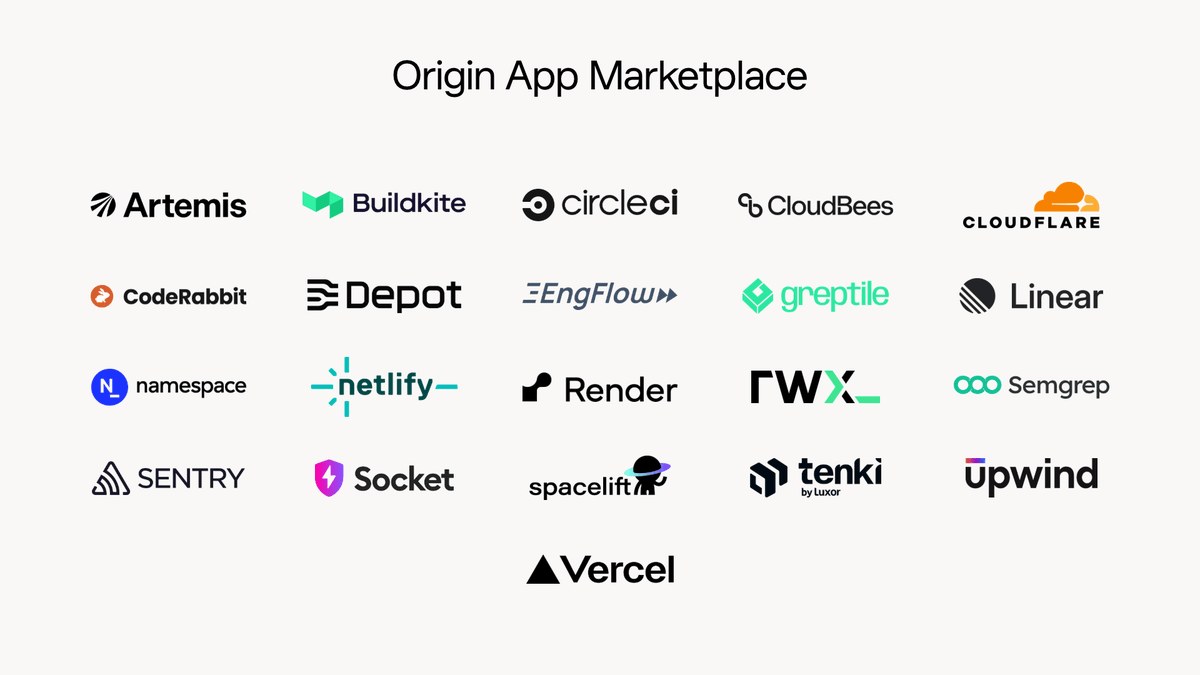
5. Cursor Origin: 20+ integrations, marketplace open
Key points: @cursor_ai announced that code-hosting platform Origin now supports 20+ integrations — CI, deployments, code review, security, monitoring, and project management can connect straight to repos. Follow-ups said the marketplace is open to public submissions, so any team shipping developer tools can publish an app, with a publishing guide linked. Beyond Projects / Cloud Agents, this turns the hosting surface into a pluggable platform.
Why it matters: Yesterday was unified subscription quota; today Origin hooks the surrounding toolchain into the same code host — after agents write code, the pipeline starts consolidating under one roof.
- Cursor: 20+ integrations: https://x.com/cursor_ai/status/2110075611633074295
- Cursor: marketplace open: https://x.com/cursor_ai/status/2110075624253751796
6. OpenCode: Cat Jam free (zero data retention)
Key points: @opencode announced stealth model Cat Jam is free in OpenCode: very fast, built for agentic coding, and zero data retention. The same day they also wired up Gemini 4 Argon (see item 1). A day after OpenCode 2.0, a free stealth model is the second track — major release plus model shelf.
Why it matters: While paid frontier stacks get more expensive, a free + ZDR + agent-first option immediately changes the default model pick.
- OpenCode: Cat Jam free: https://x.com/opencode/status/2110068008945381853
7. poteto: ban code comments — agents spread them like weeds
Key points: @poteto’s long post: ban and delete most if not all code comments. Agents love copying what already exists — a harmless comment explaining a temporary workaround becomes a virus/weed agents use to finish fast, until the repo fills with stale hacks. She points to pstack’s /no-comments skill as weedkiller and shares a prompt for @bot to run /poteto-mode + /swarm across a repo. @zeeg (David Cramer) pushed back hard: good comments still matter; don’t ban them wholesale — the argument itself shows “are comments still docs in the agent era?” is now mainstream timeline material.
Why it matters: Yesterday was verification / “correct code”; today is a concrete hygiene rule — every temporary note you leave can become tomorrow’s agent policy.
- poteto: ban comments: https://x.com/poteto/status/2110149626133438732
- zeeg: against a blanket ban: https://x.com/zeeg/status/2110151014540300611
8. Muse Wonder Full, day after: finds PRs — watch Contributor mode
Key points: Day-after talk moved from leaderboards to hands-on. @theo asked Opus 5.5, GPT-6.1 Sol, and Muse Wonder Full to fix the same bug: Opus found the root cause and filed a PR; Sol crashed, then fixed it and wrote 300 lines of tests (he later confirmed Sol’s fix wouldn’t have worked); Wonder Full found a small PR someone else had filed and said to merge it instead — “I really like this model.” @dhh had already shipped two Omarchy PRs with Wonder; @QuixiAI said Wonder Full on Muse Code is faster than Astra and handles compiler work that chokes Codex. Third-party Artificial Analysis Coding Agents Index lists Wonder Full (Muse Code, max) at 68, tied with Claude Code + Sonnet 5.5. Parallel warning: Muse Code subscriptions default to Contributor mode (training on your content) — flip it off before connecting a company repo.
Why it matters: Yesterday was launch and S-tier; today is “does it actually work” plus “will the default ToS eat your code” — both closer to production than a score.
- theo: three-model bug fix: https://x.com/theo/status/2109874961070616654
- theo: Sol’s fix wouldn’t work: https://x.com/theo/status/2109875105035894846
- theo: liking Wonder Full: https://x.com/theo/status/2109973219793096780
- dhh: two Omarchy PRs: https://x.com/dhh/status/2109840362365726937
- QuixiAI: Muse Code vibe: https://x.com/QuixiAI/status/2109831644110832045

9. Grok Bot: Memory Transfer + per-bot email
Key points: @BrianRoemmele shipped Memory Transfer — a Grok Bot that brings over what ChatGPT / Claude learned about you. Paste a prompt result or drop a full export; review line by line before anything is saved, with source/date tags and no silent overwrite. @elonmusk quote-tweeted “Grok @Bot memory transfer.” Same day @ericzakariasson announced 0.70.2: each bot can claim an @mail.grokbot.com address and draft mail; Figma / Notion / Canva show up as live cards; bots can search X and read public posts without connecting an account. @poteto opened applications for role-based Grok Bot X Communities.
Why it matters: Yesterday was subscription bundling and “hire Bot as staff”; today memory is portable and each Bot gets an inbox — consumer agents move from chat panes to named desks.
- BrianRoemmele: Memory Transfer: https://x.com/BrianRoemmele/status/2109853221808435364
- Elon: amplify: https://x.com/elonmusk/status/2109867516646637579
- ericzakariasson: 0.70.2 email: https://x.com/ericzakariasson/status/2110057450850435451
- poteto: Communities: https://x.com/poteto/status/2110029484758028732
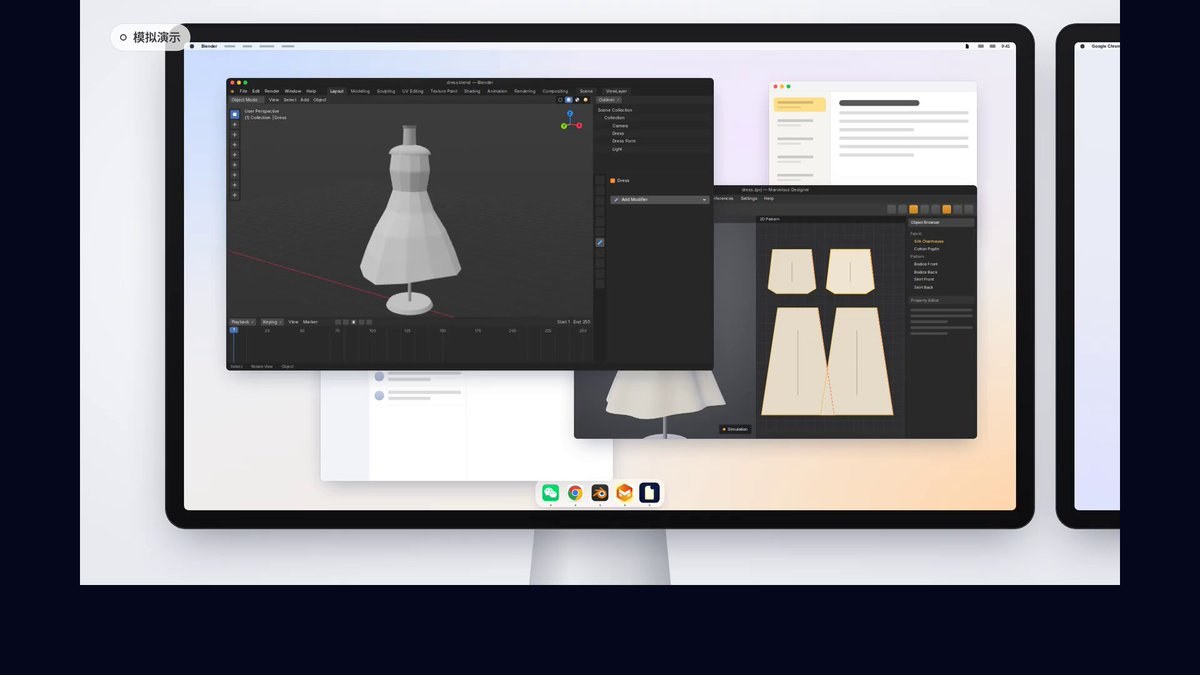
10. yomado: a virtual display so agents stop stealing your screen
Key points: @turingou shipped product #18 of the year — yomado (“night window”), a virtual display for agents. The pain is concrete: Codex-class agents can already see screenshots and click, but many apps have no MCP; when human and agent share one Mac, browser tabs get hijacked. yomado opens per-agent virtual displays on Mac (one for Codex, one for Grok Bot), parks agent apps there, and keeps your windows on the main screen; bundled skills let the agent open / move / restore windows itself. Open source (MIT) for Apple-silicon Macs. Next up: agents that can still drive the UI while the machine is locked or headless.
Why it matters: Same author pushed Yobiru multi-machine wake-ups yesterday; today patches “many agents, one screen” — desktop plumbing for agents is being filled in piece by piece.
- turingou: yomado launch: https://x.com/turingou/status/2109854210917593557